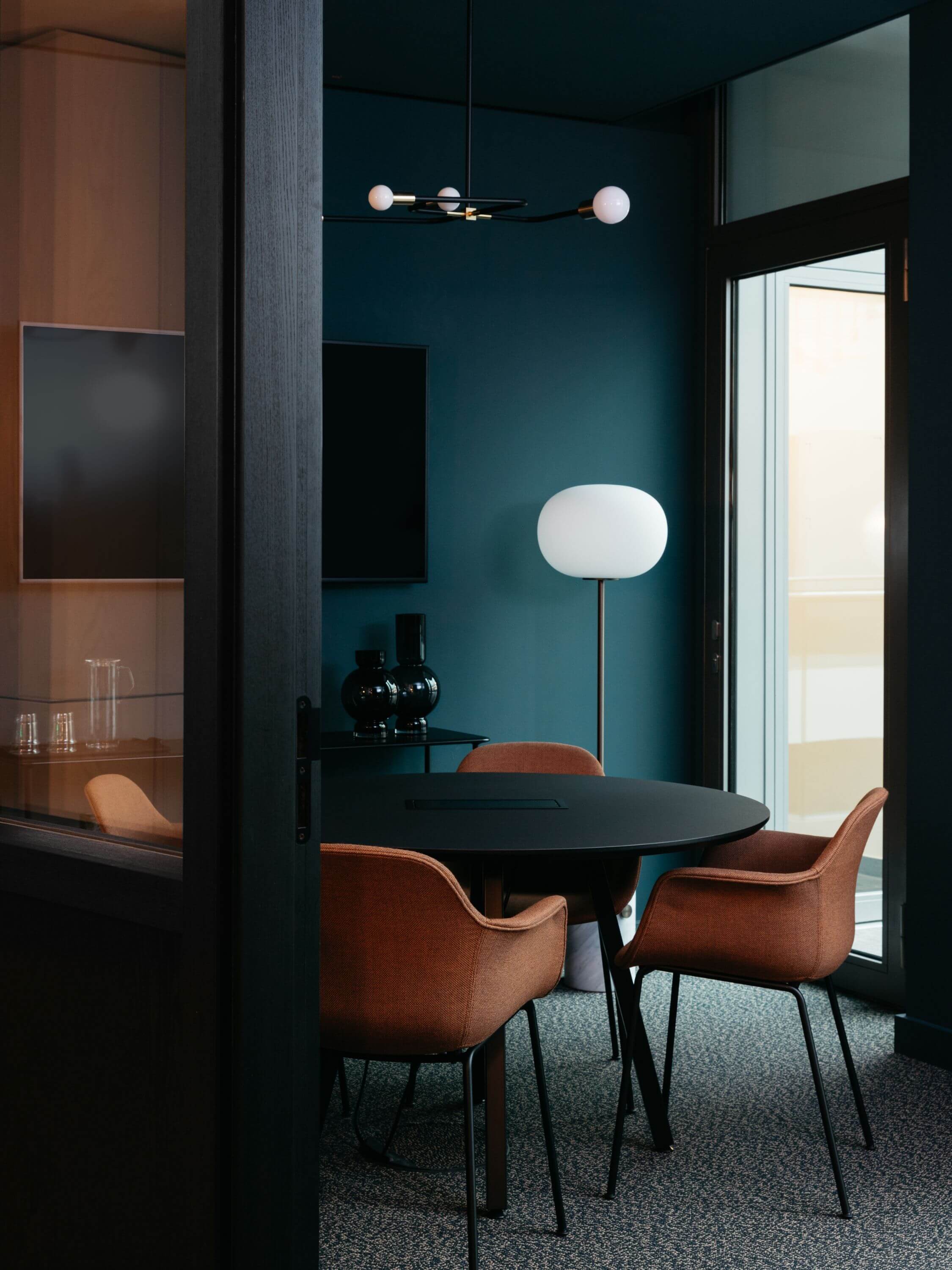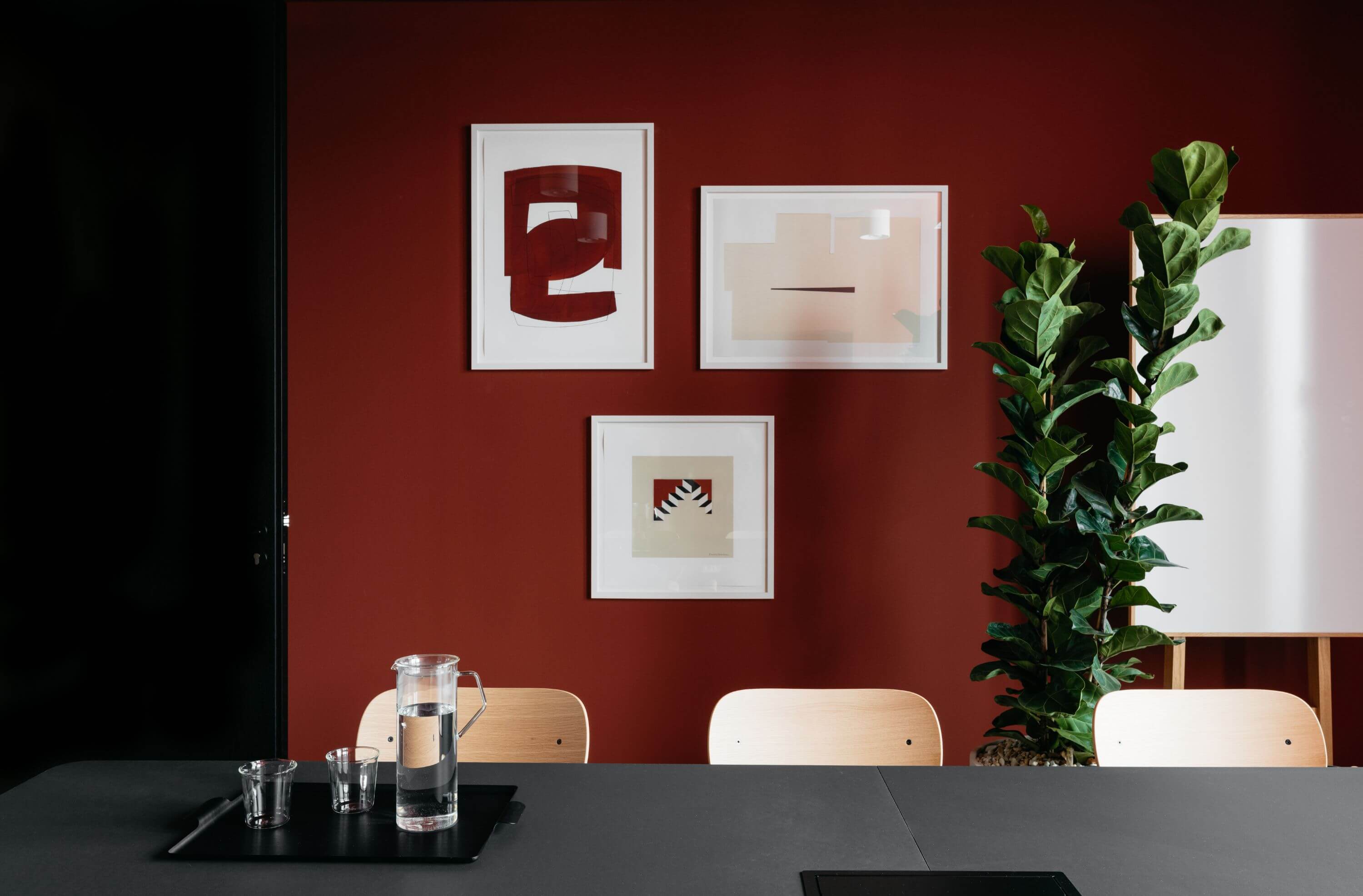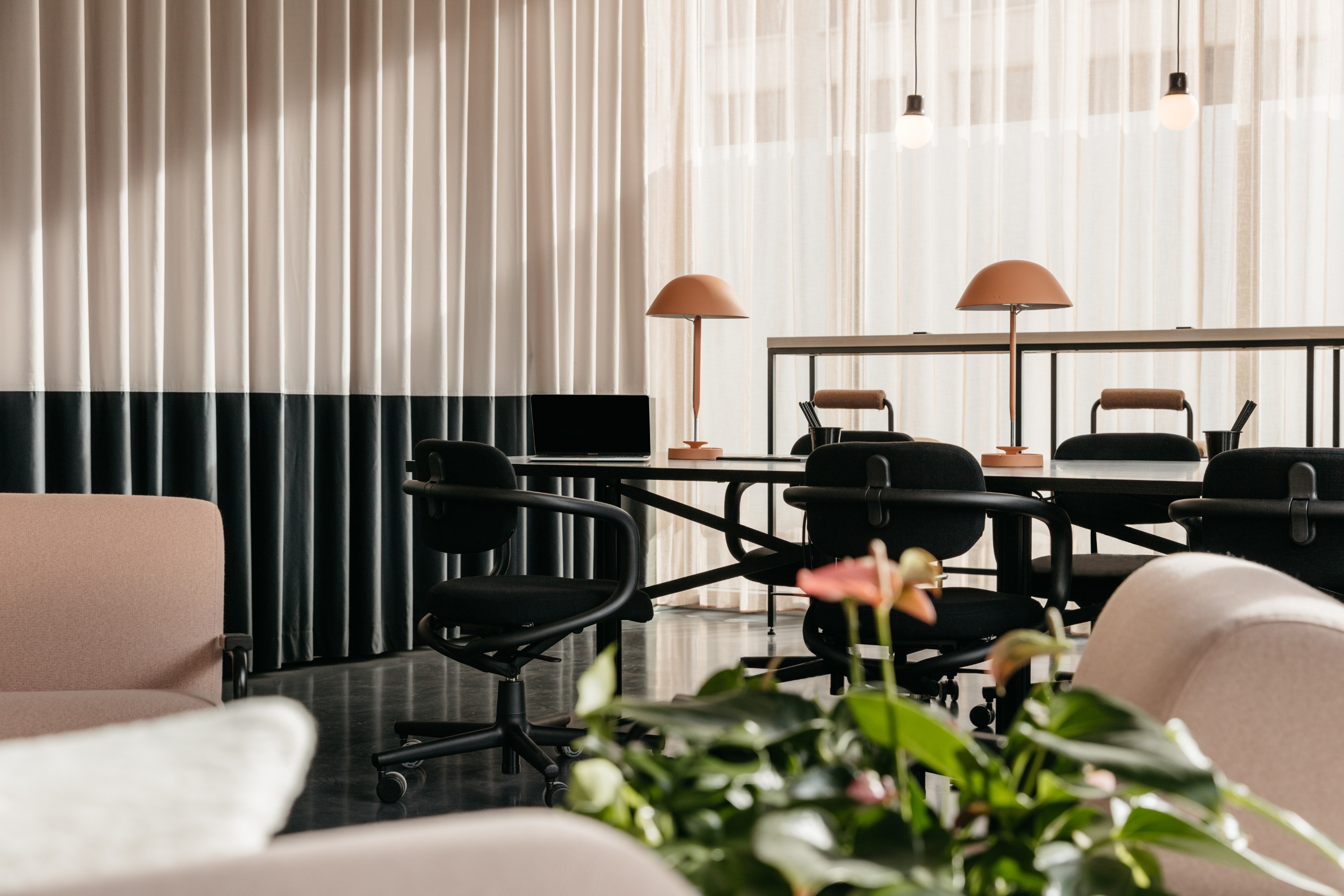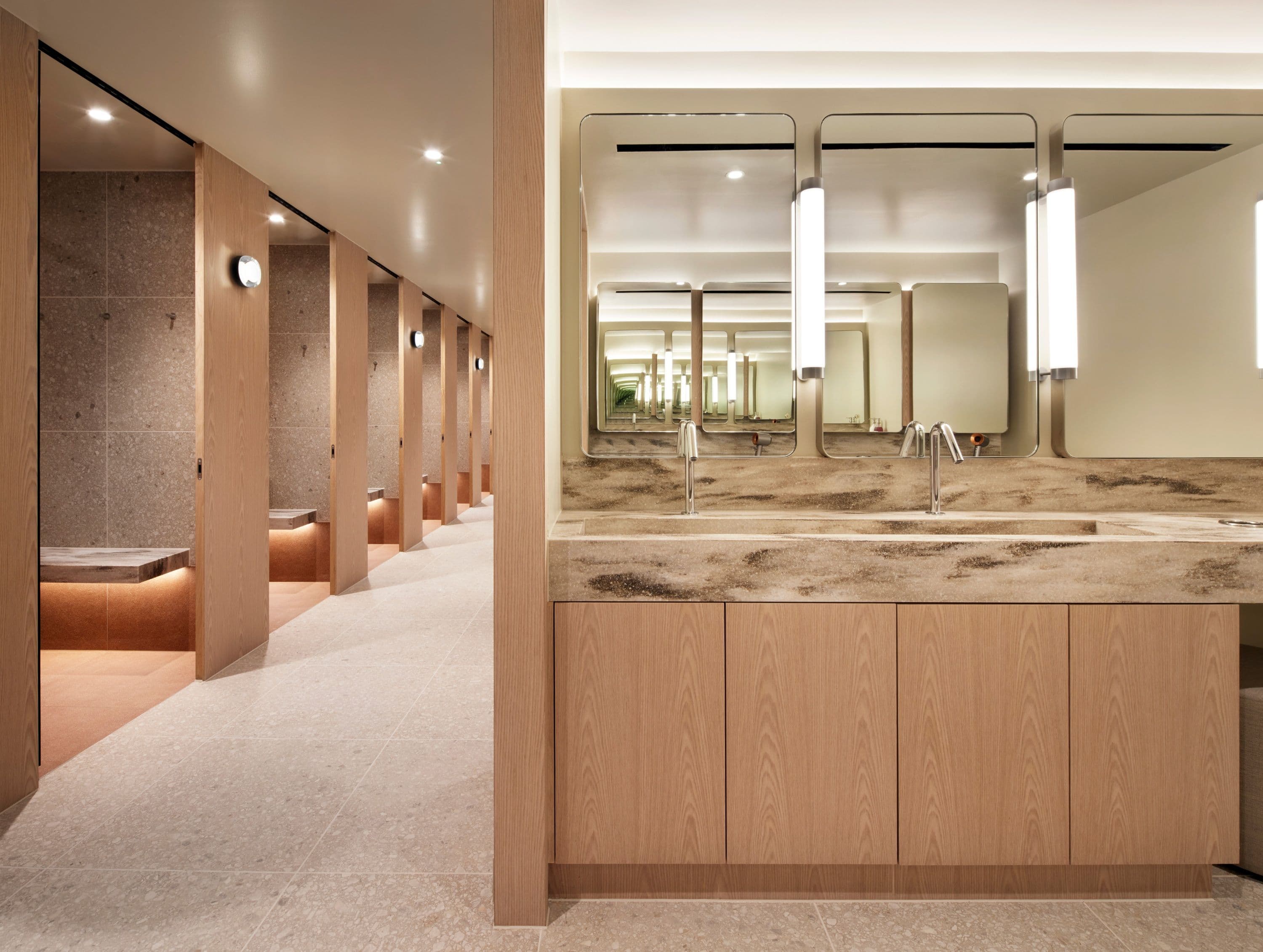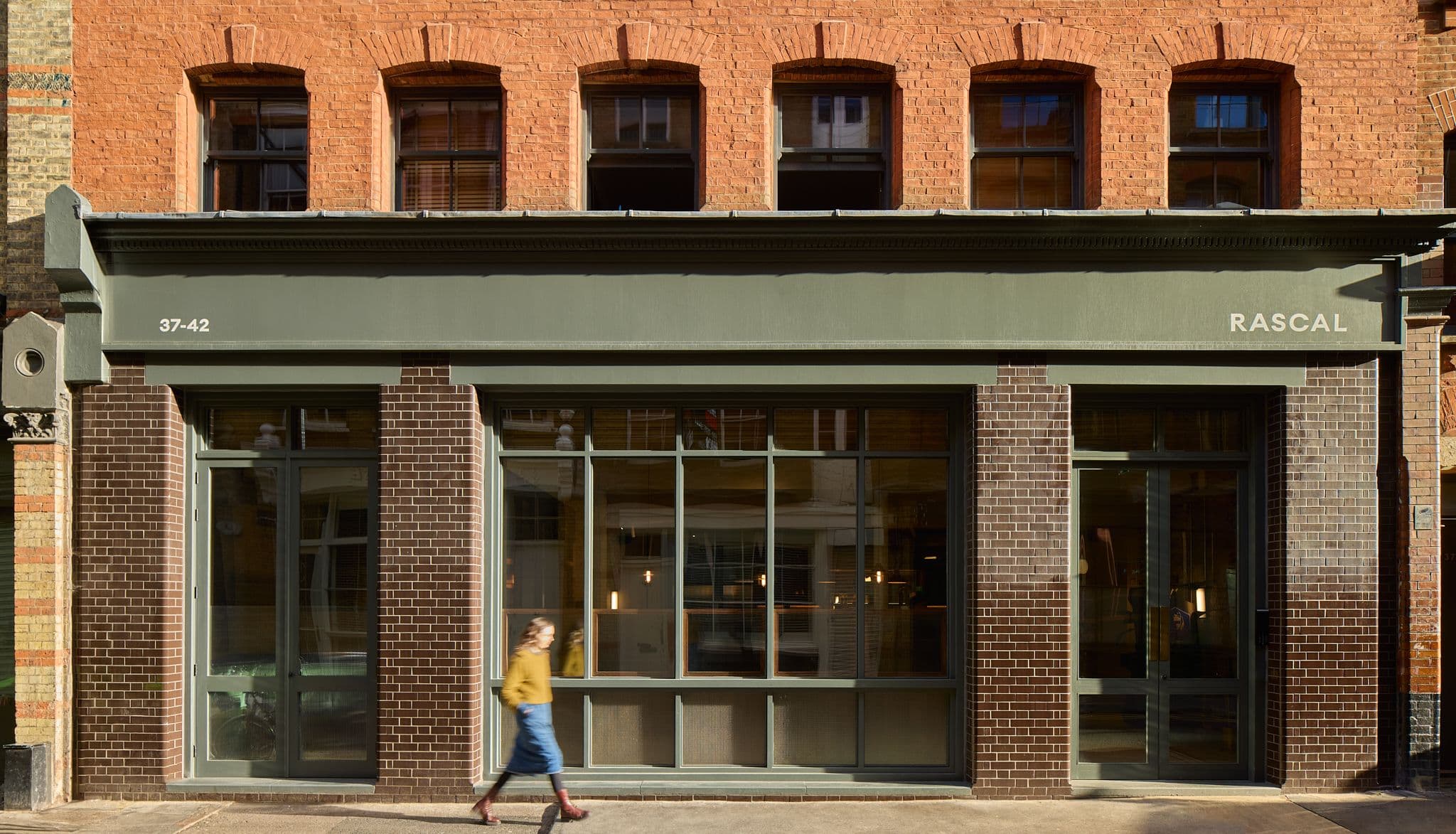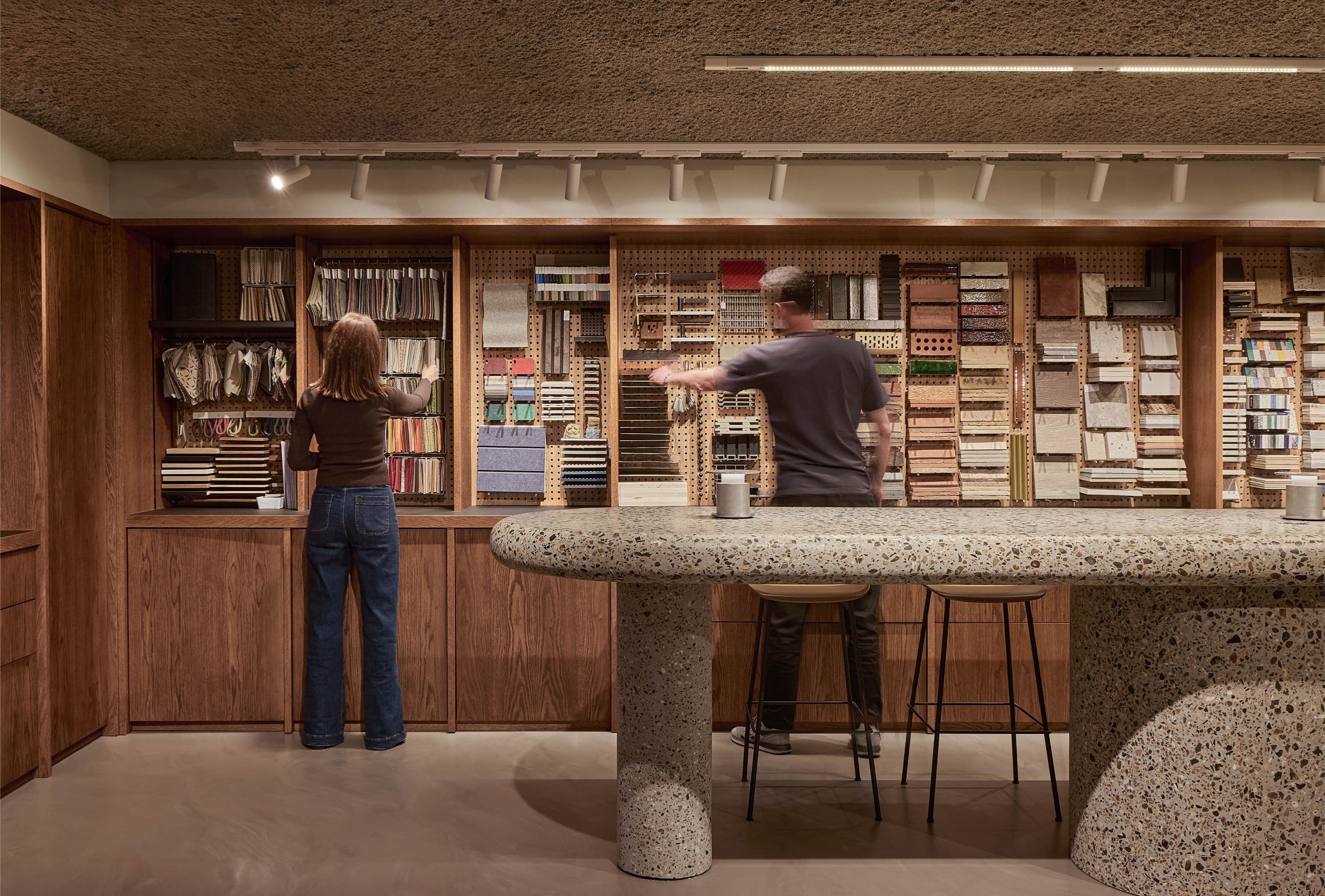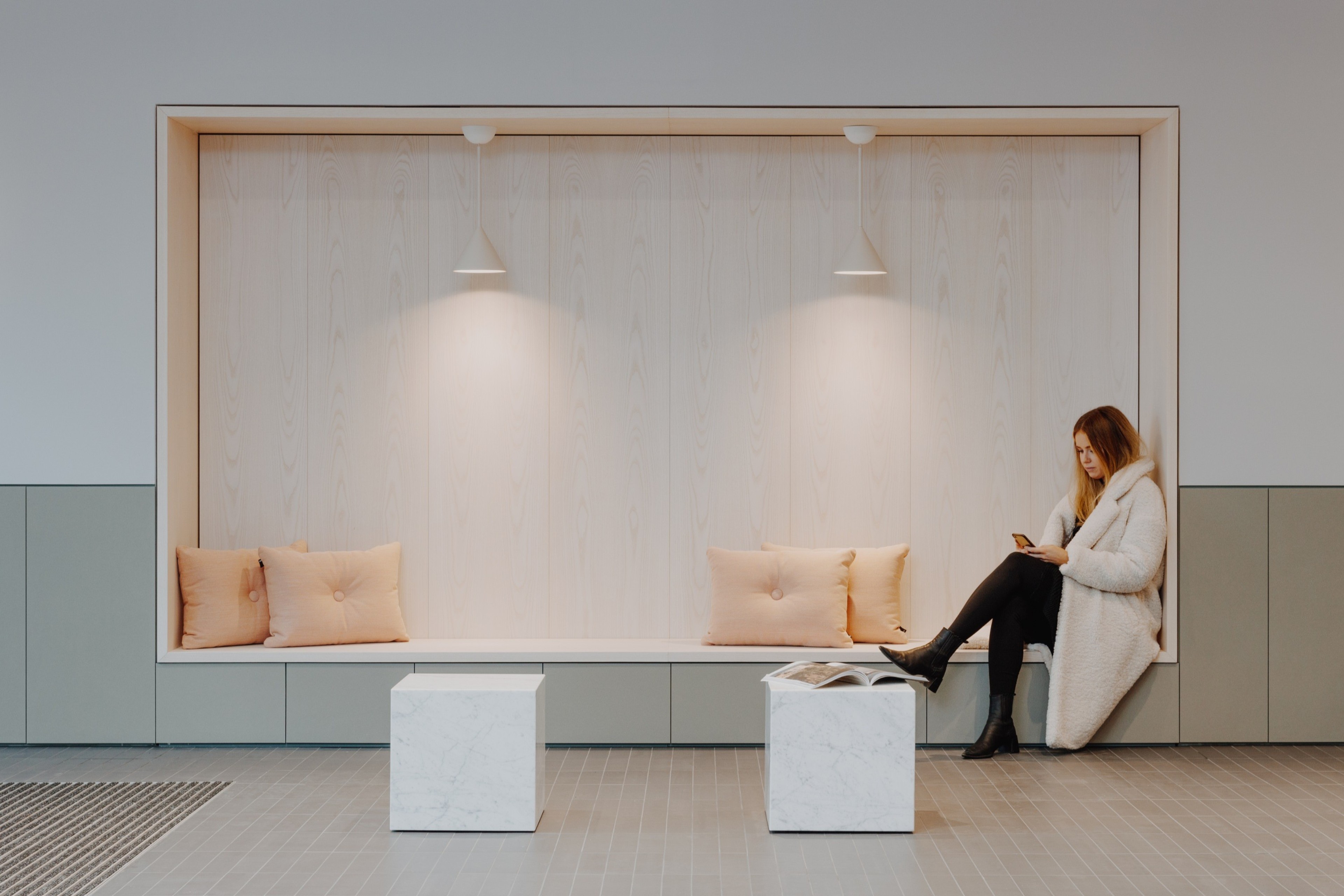
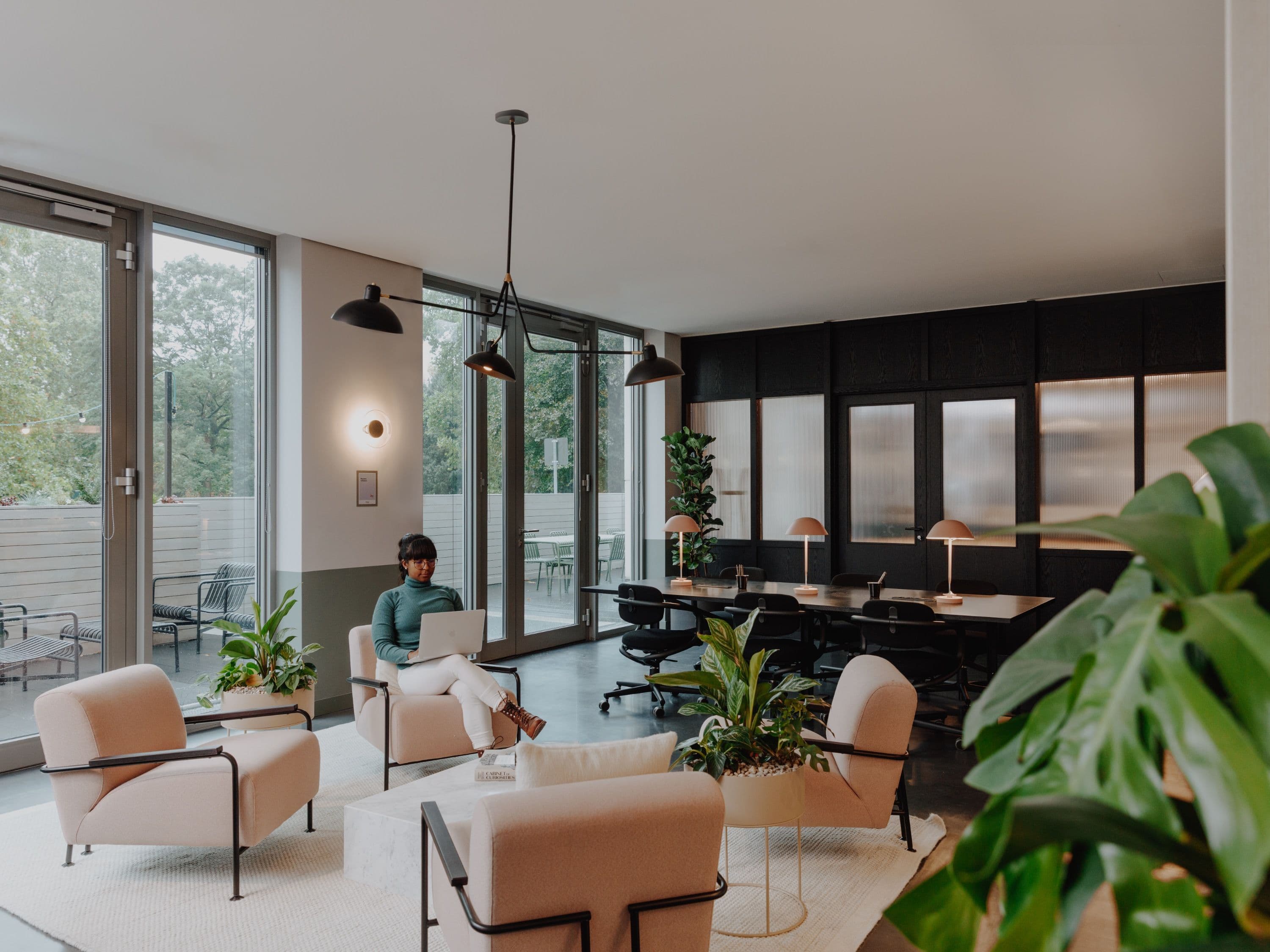
Created for longstanding client The Office Group (now Fora), Oper 46 is a flexible workspace set within a utilitarian Frankfurt office building. At its centre, new “Spanish Steps” transform its central atrium into a place to sit, work and gather – from casual breakout and informal meetings to evening, auditorium-style events. A confident palette of colour, ash joinery and crafted details complements the wider building’s corporate feel, creating a warm, characterful heart for everyday working life.
- Location
- Frankfurt, Germany
- Size
- 70,000 sqft
- Client
- The Office Group (now Fora)
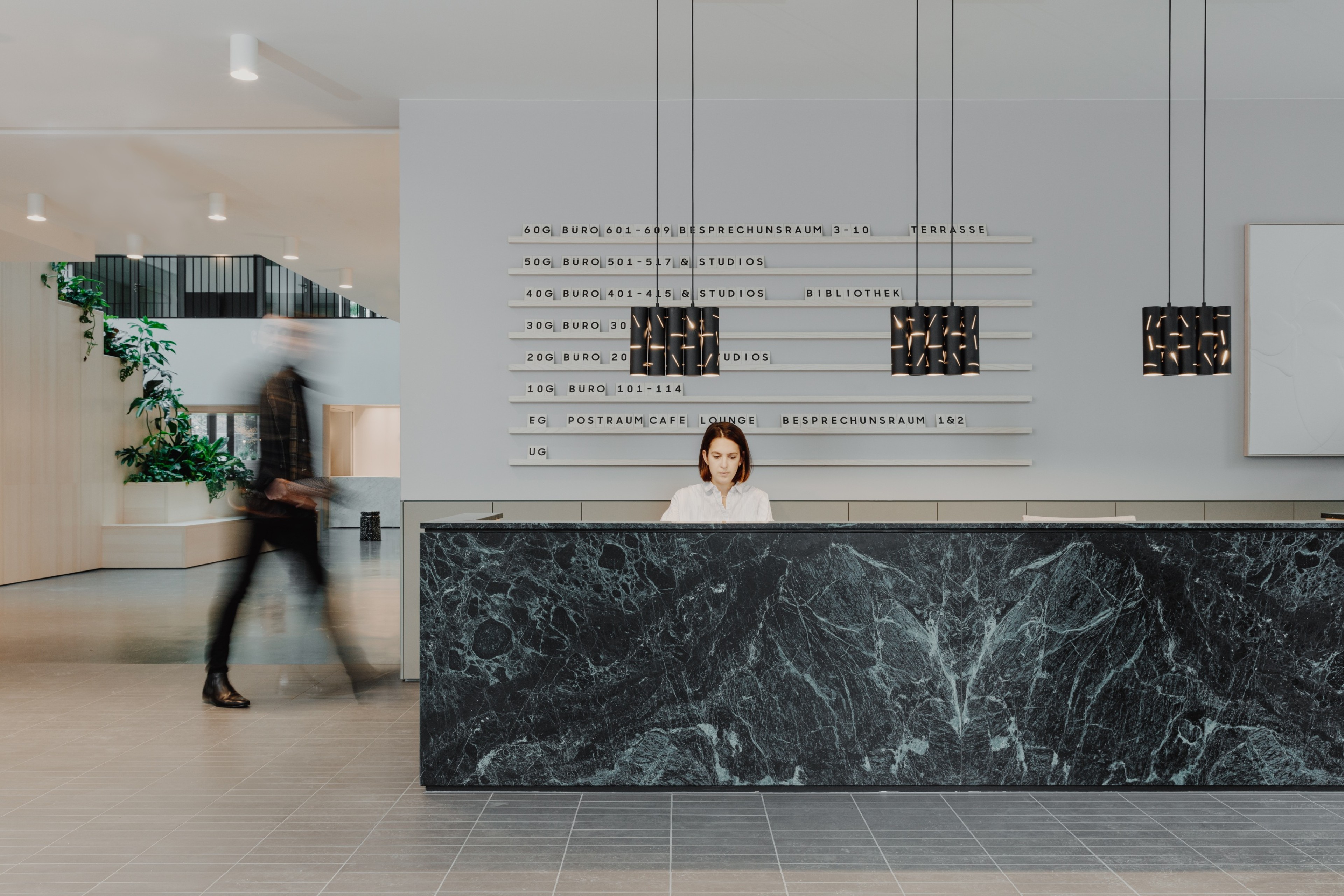
The Office Group (now Fora) appointed us to rethink Bockenheimer Anlage 46, a workspace set within one of Frankfurt’s most culturally rich areas, close to the Alte Oper and Rothschild Park. Despite its setting, the interiors felt cold, corporate and disconnected from the city around them. As our first project for TOG (now Fora) outside the UK, we wanted it to set a benchmark – an exciting alternative to the city’s typical business-district offices, distinctive, social and grounded in place.
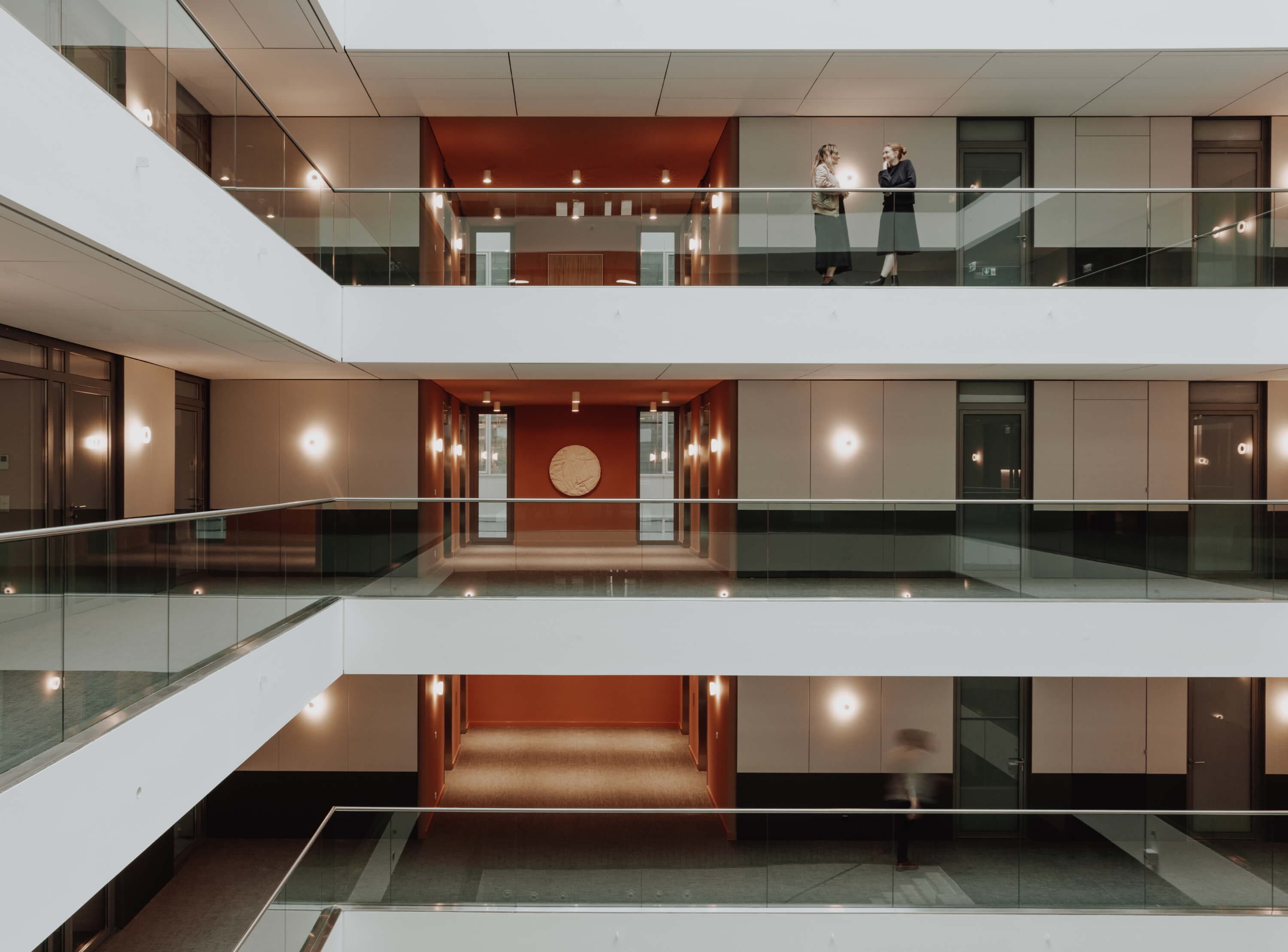
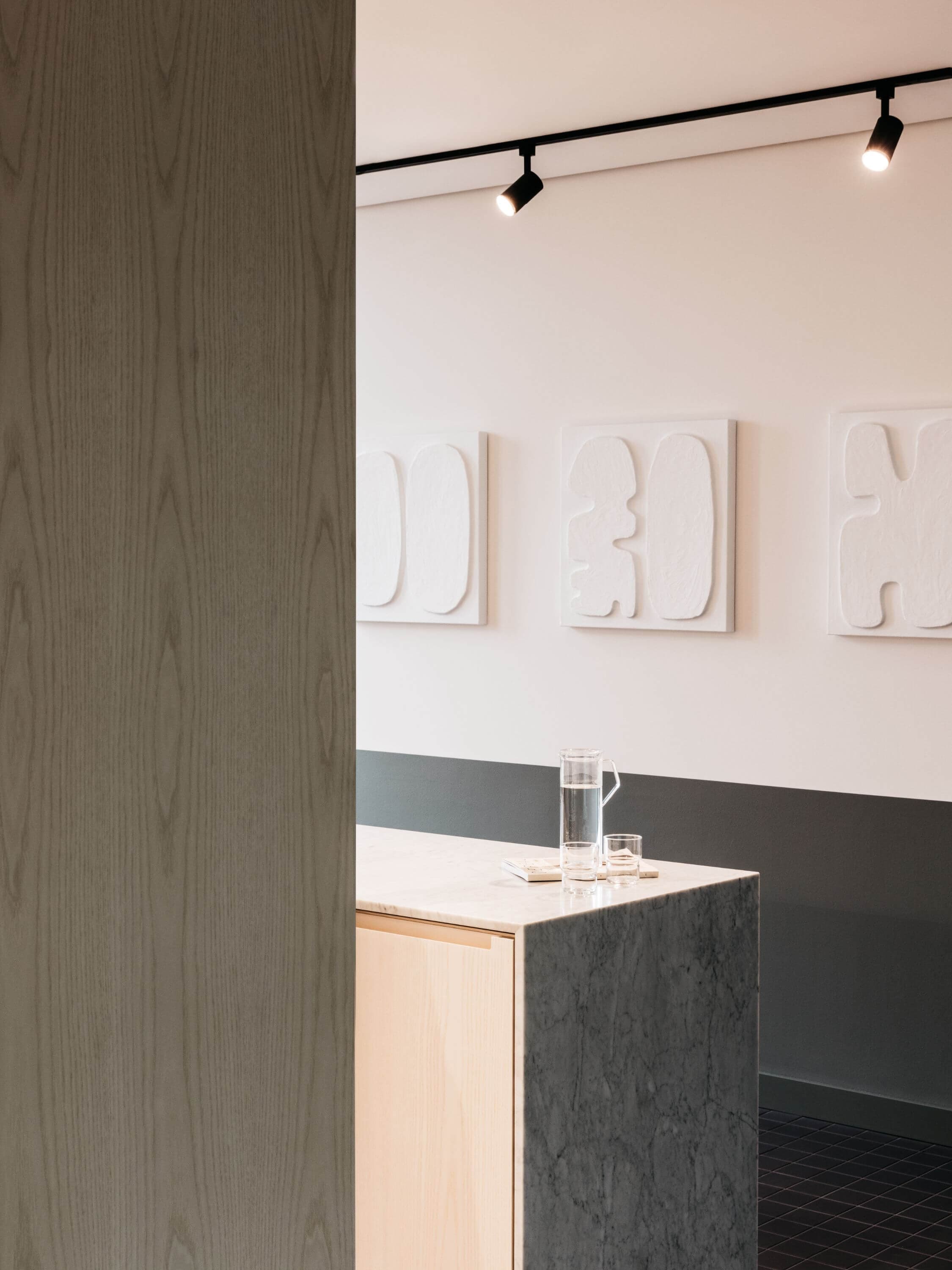
The building’s large central atrium was under-utilised, and a disjointed cellular plan limited connection and interaction. The ambition was to rethink the space holistically, responding to the city’s entrepreneurial energy and everyday working culture – to “capture a look and feel that would sit well within Frankfurt,” in the client’s words – and unlock the potential of the building as a welcoming, characterful workspace rooted in its context.
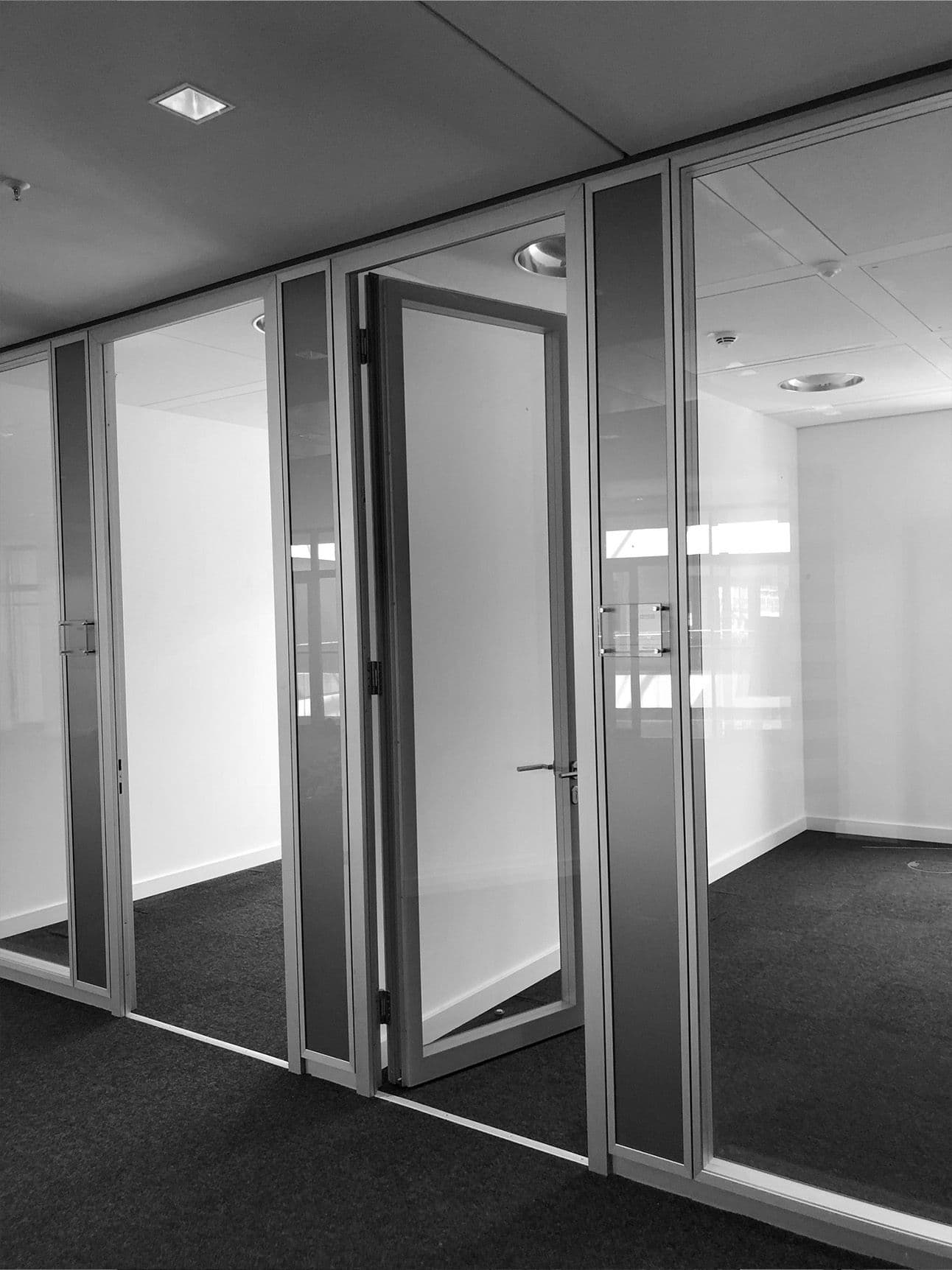
Before and After
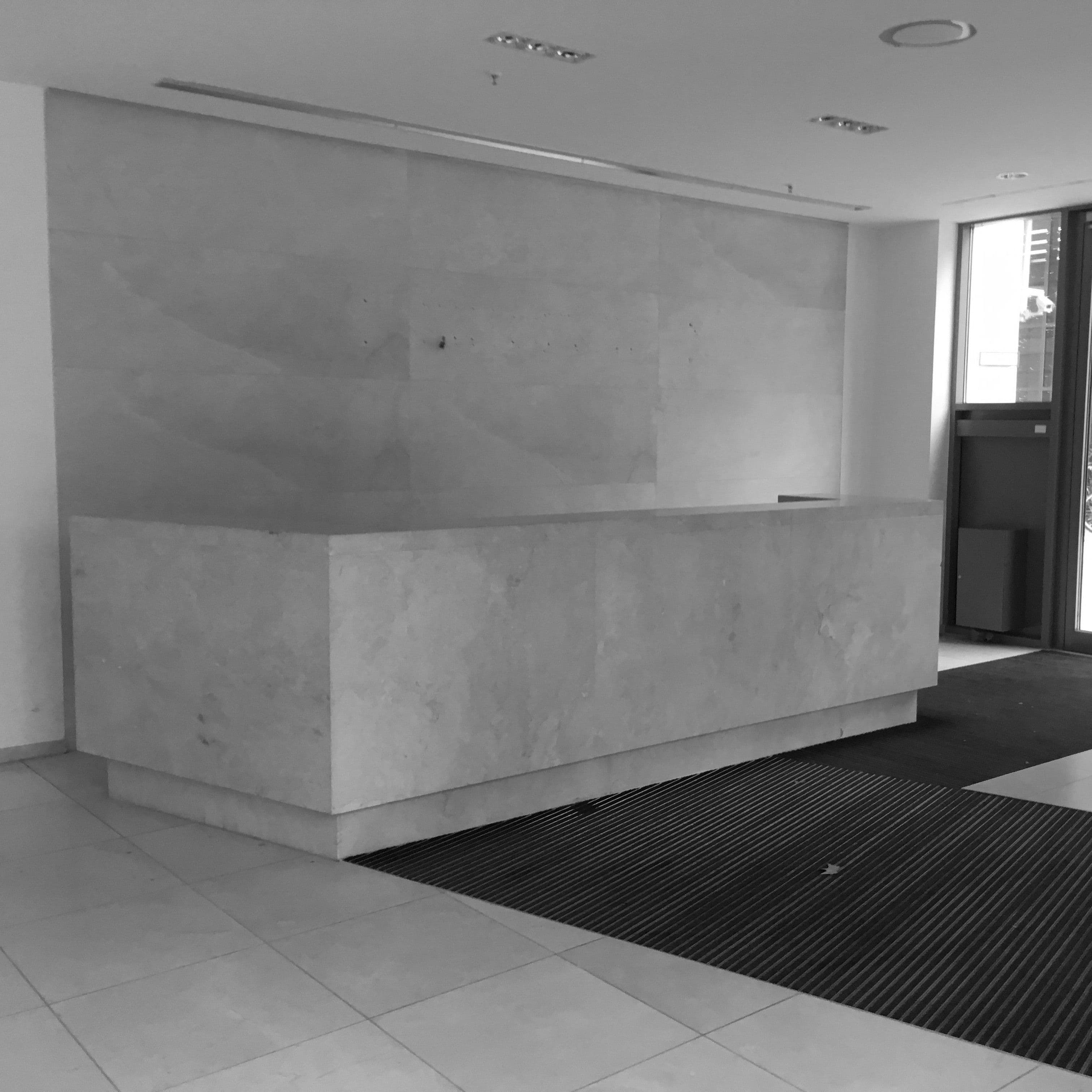
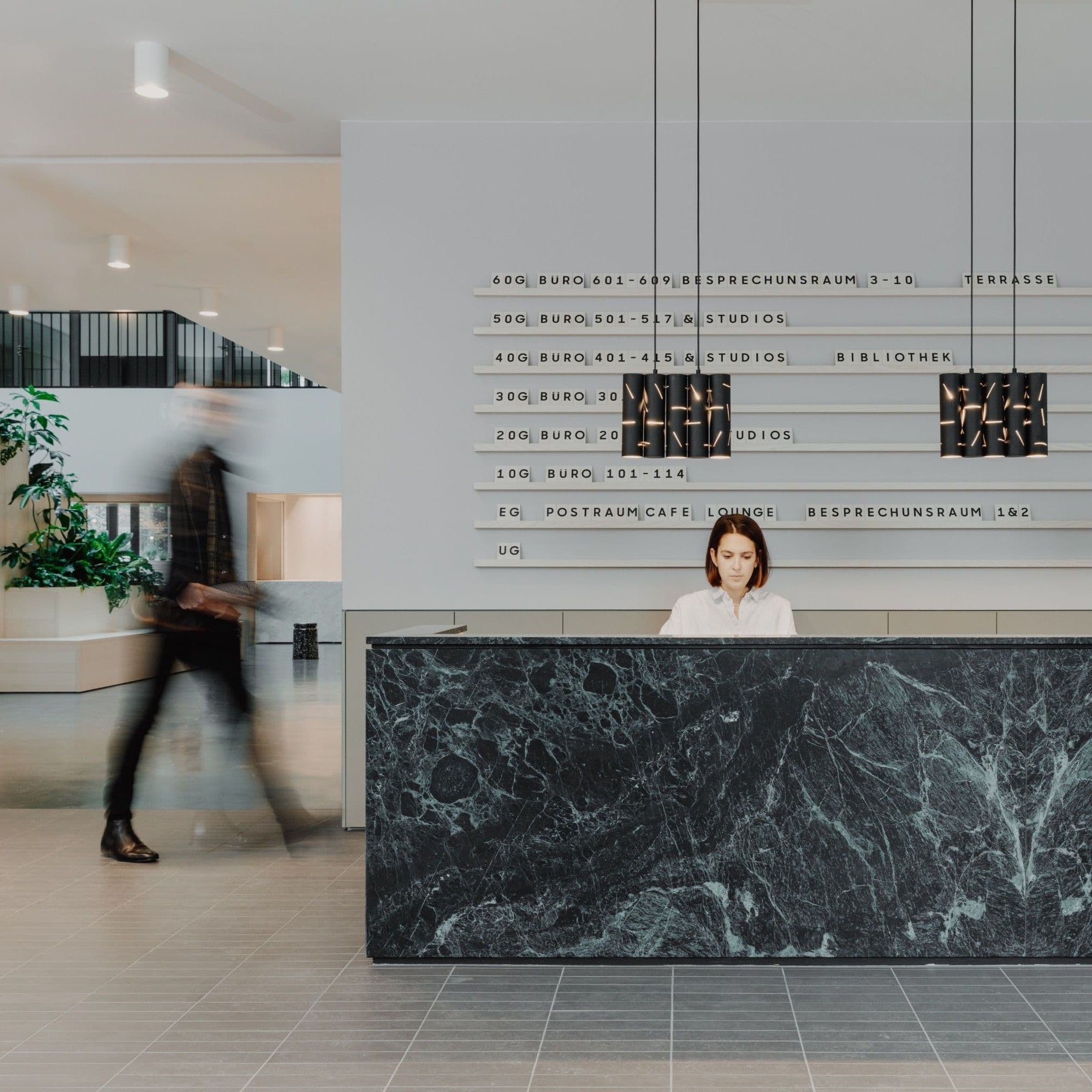
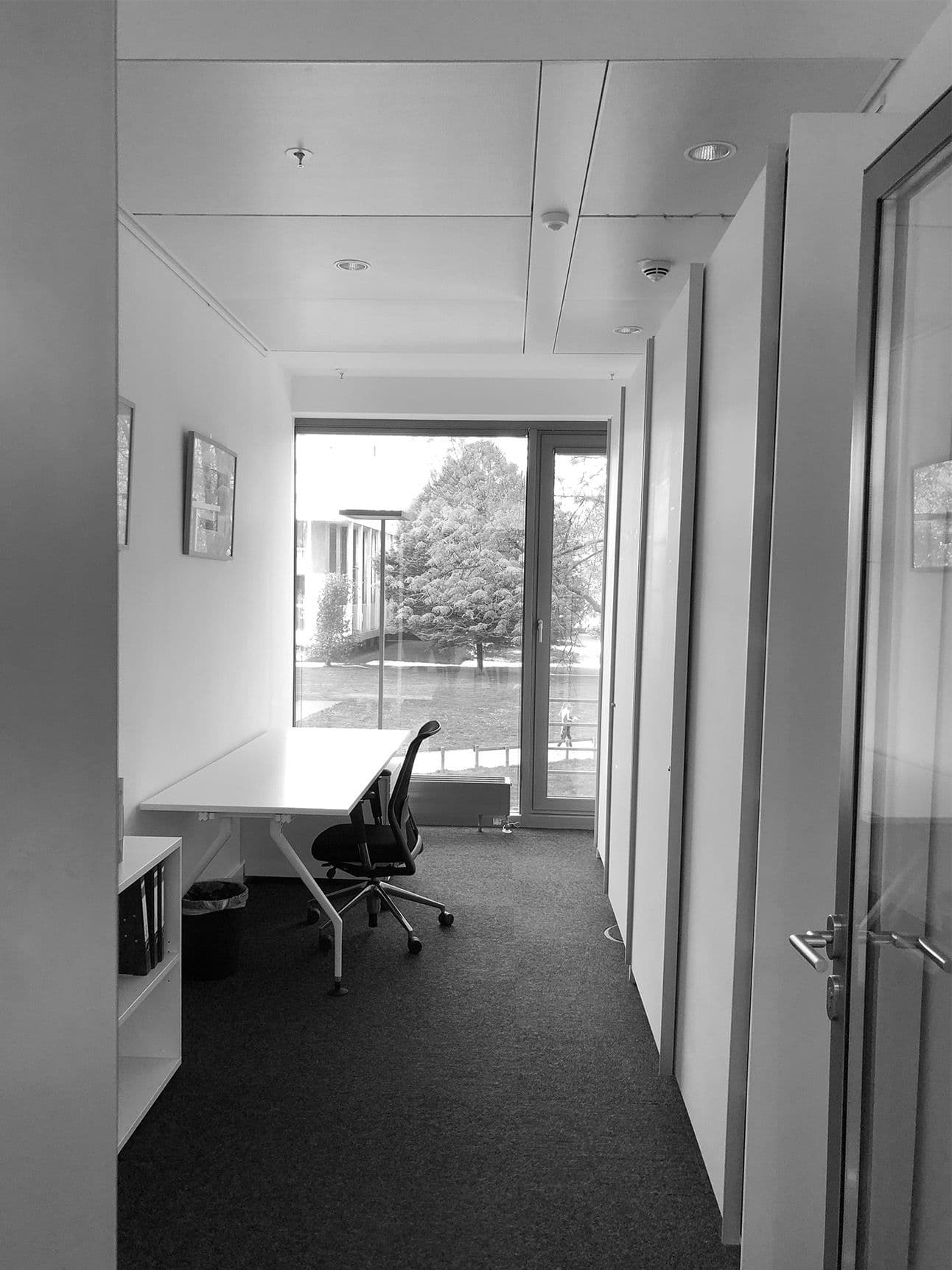
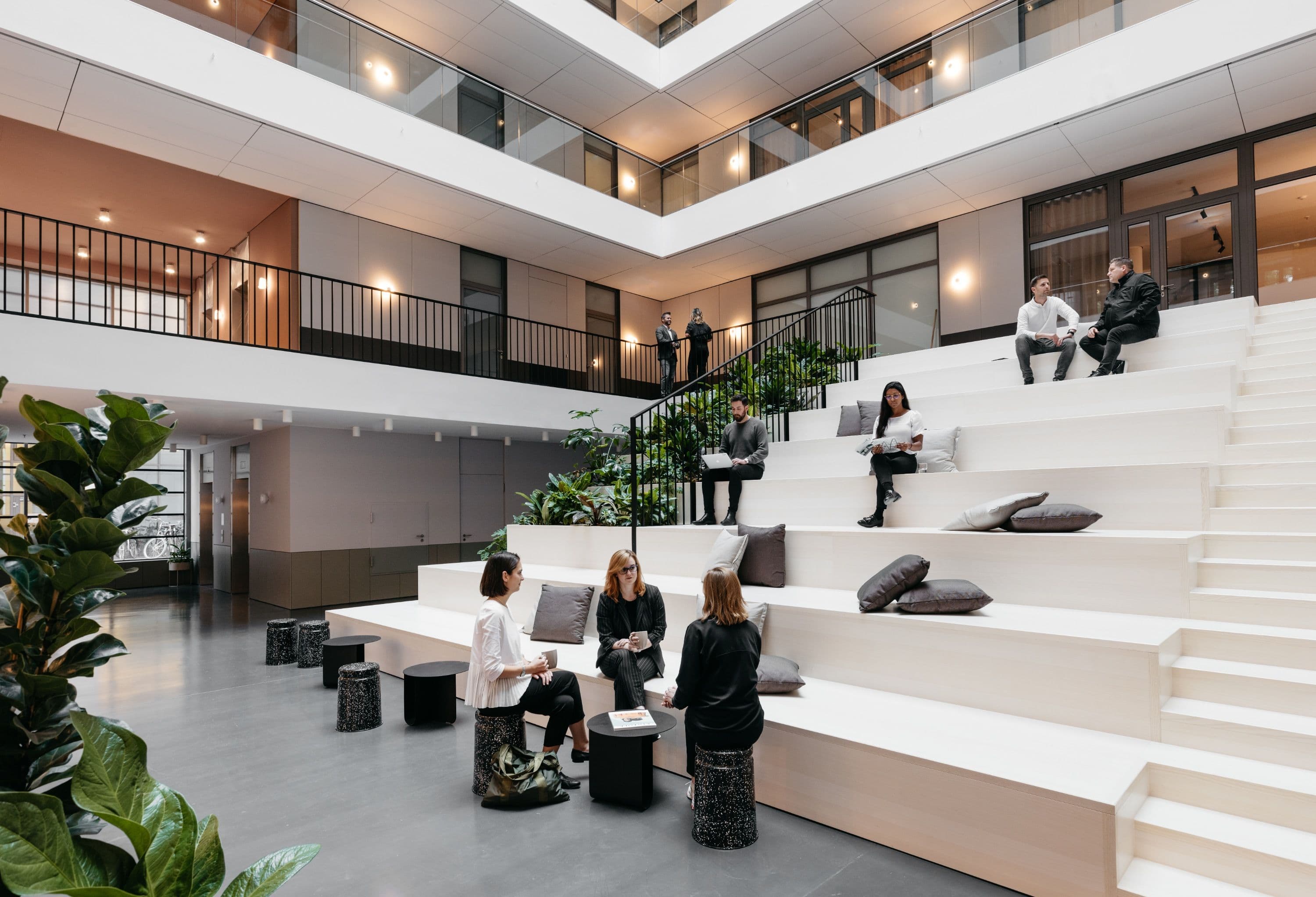
The 'Spanish Steps'
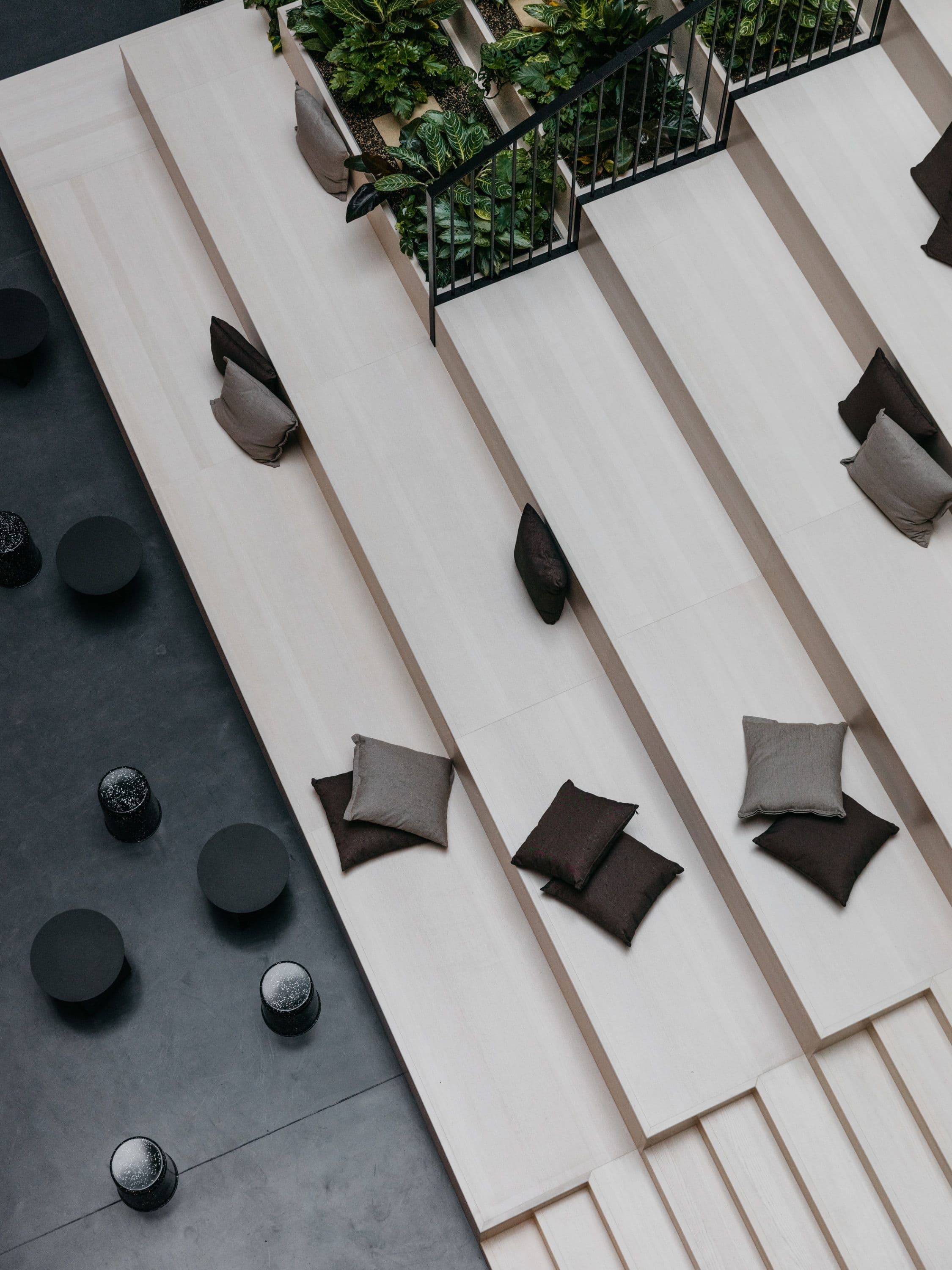
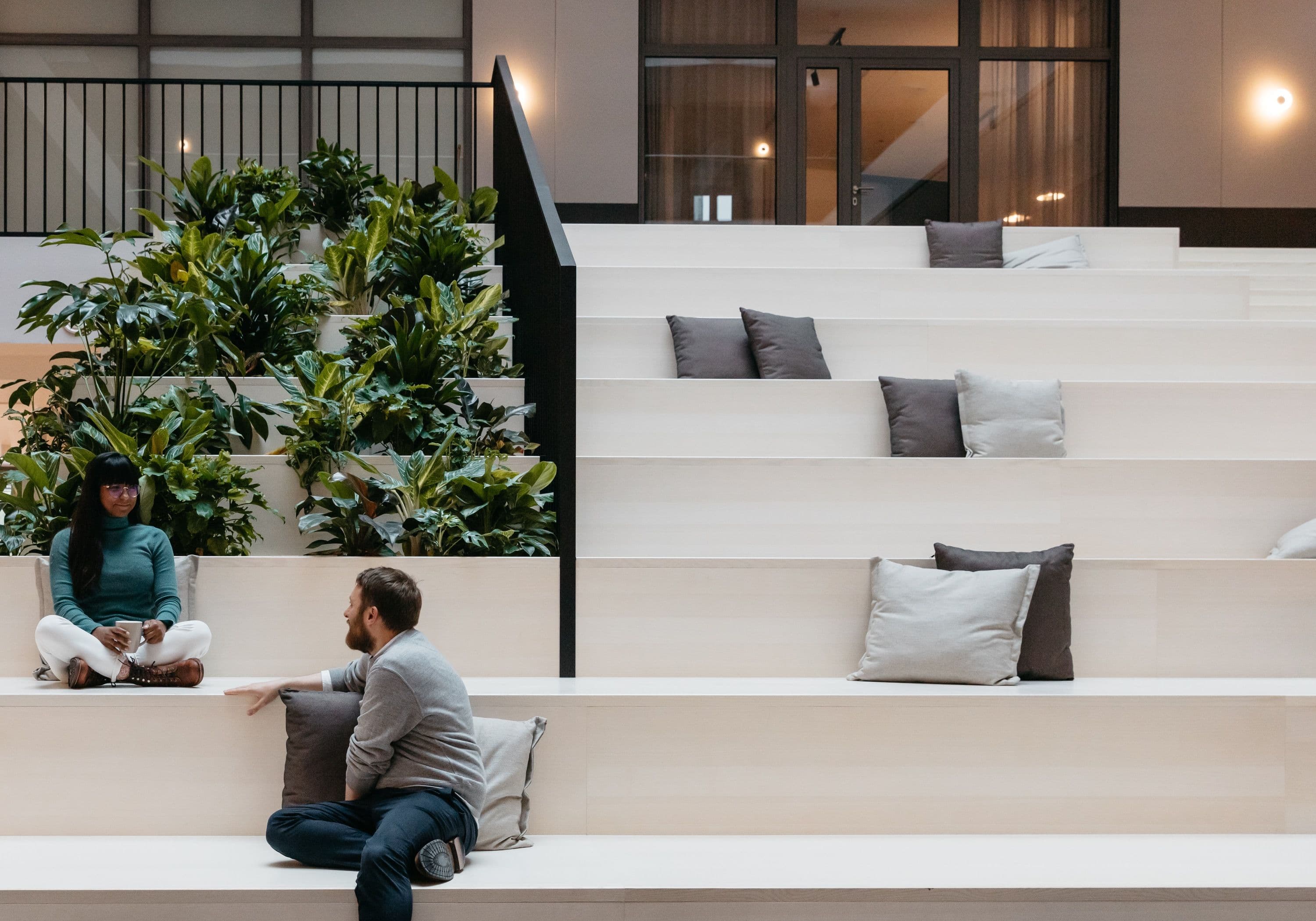
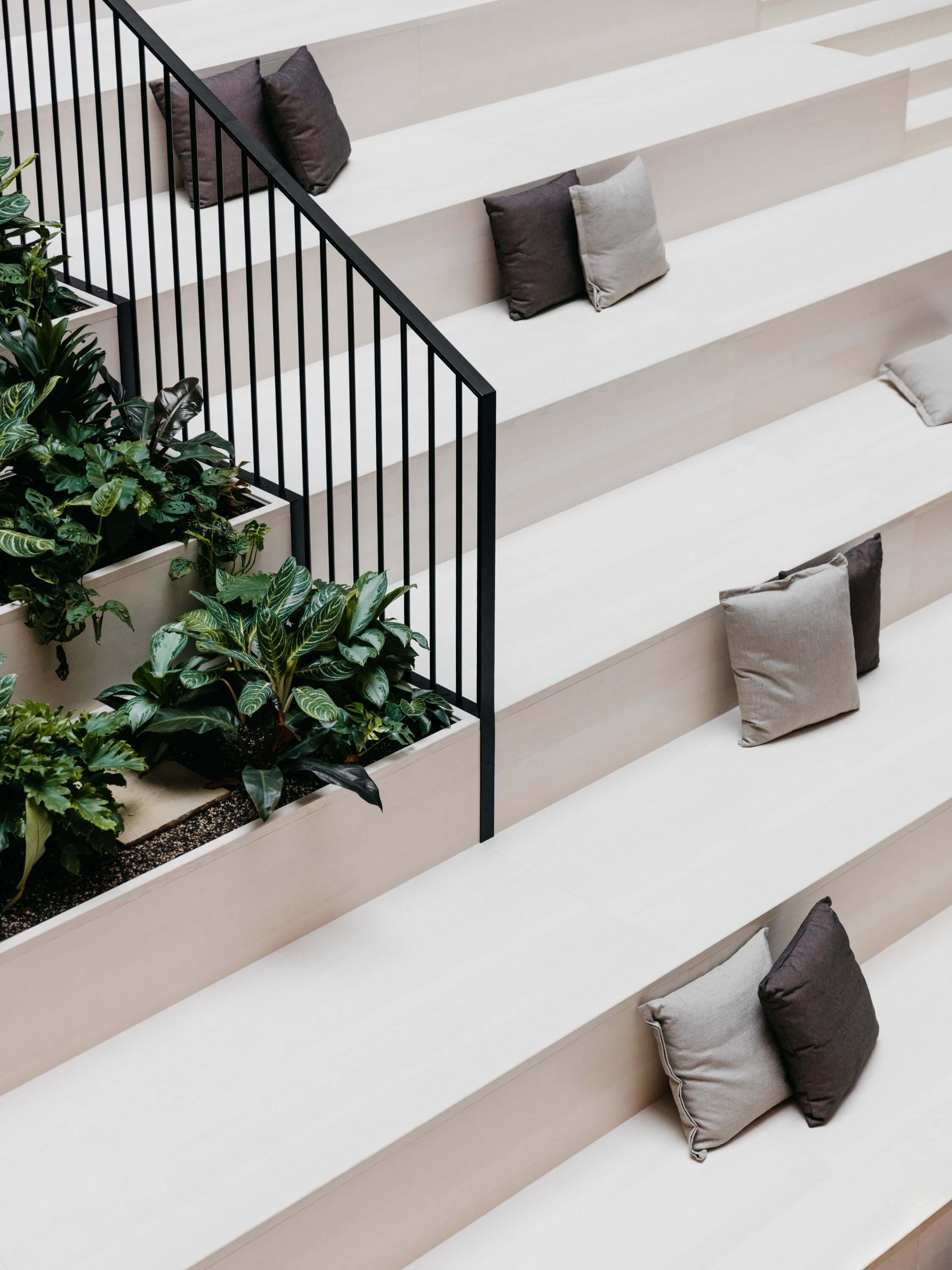
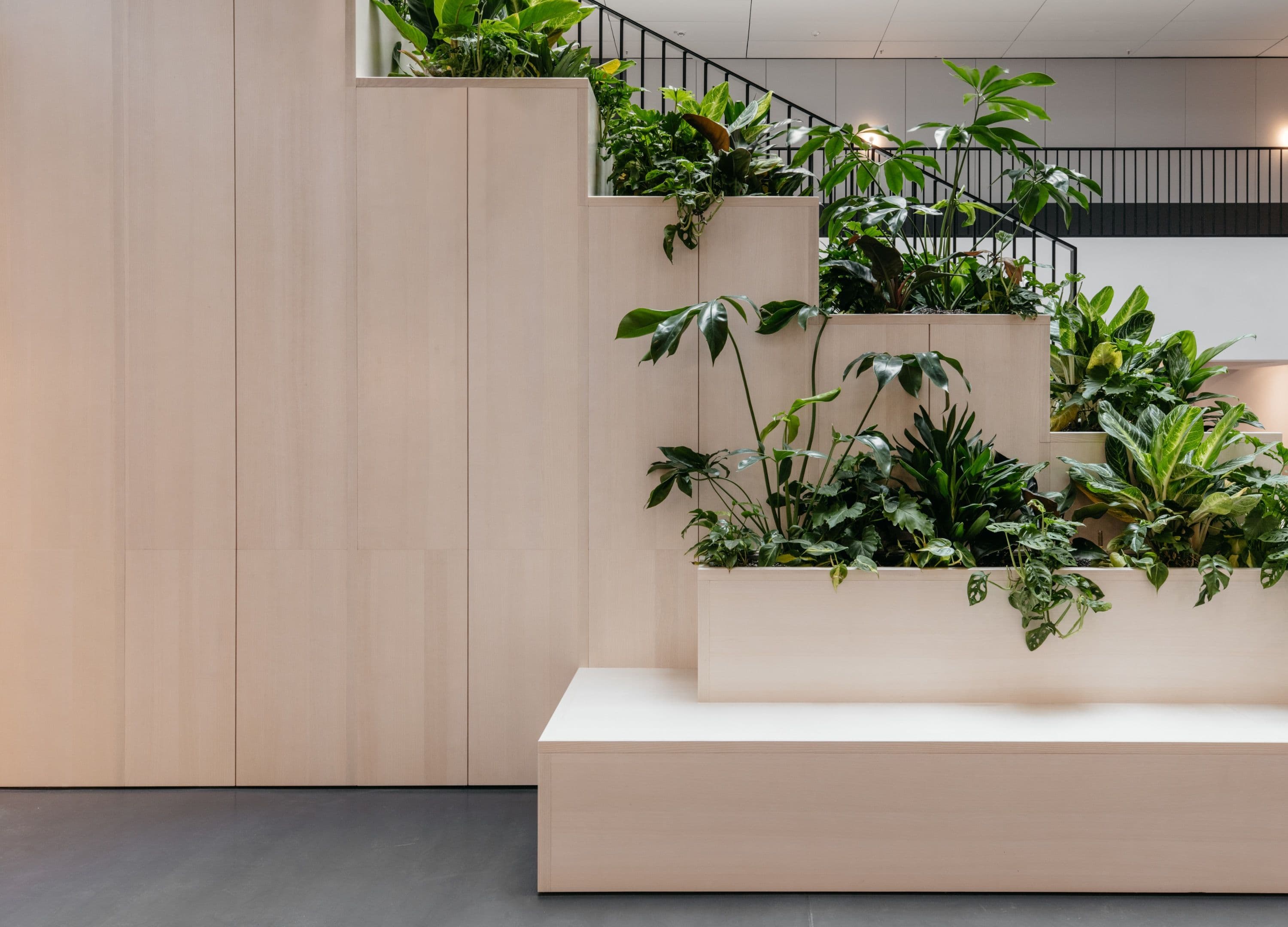
We began by unlocking the atrium. New “Spanish Steps” transform what had been an underused void into a social heart – a place for breakout working, informal meetings and evening, auditorium-style events. Views were opened across the floorplates so the building reads clearly on arrival, with long sightlines linking the atrium to the Alte Oper and Rothschild Park beyond. The plan was simplified to encourage movement, connection and chance encounters, replacing cellular separation with openness and clarity.
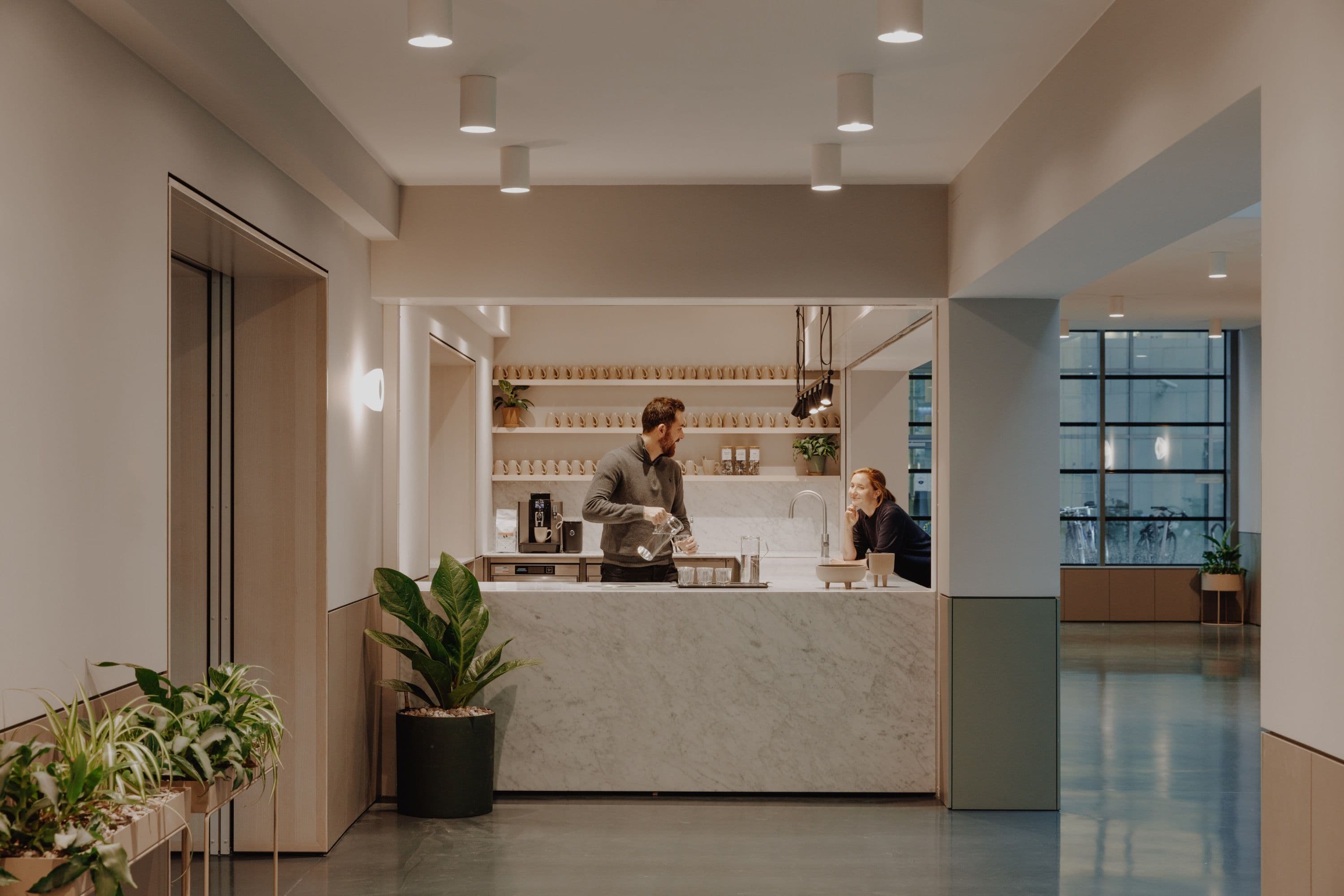
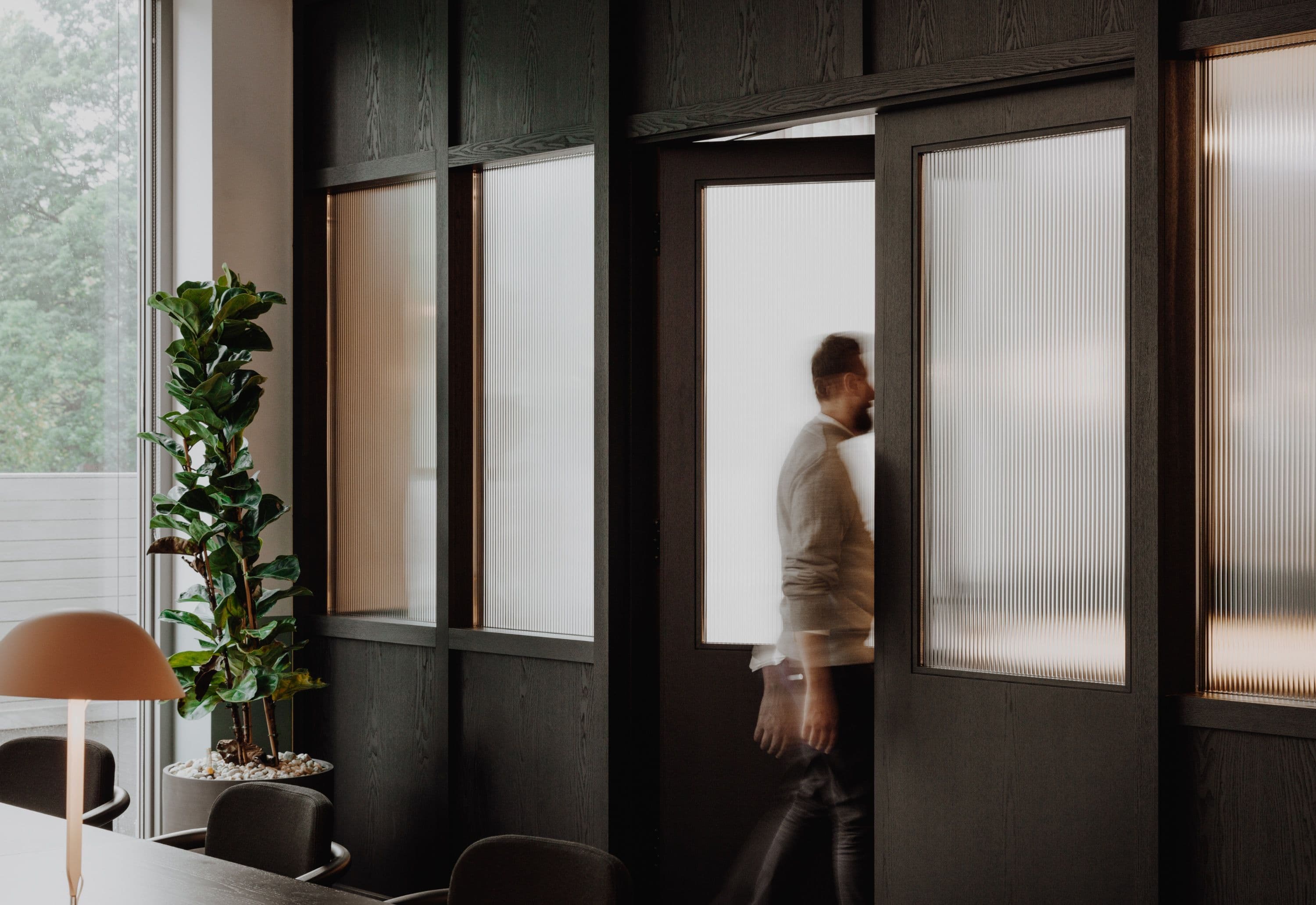
Materially, the design works with the building’s utilitarian bones rather than disguising them. A confident palette of ash joinery, planting, bright whites, deep greys and bold colour softens the structure and introduces warmth and tactility. Meeting rooms take on distinct identities, while shared spaces remain adaptable, allowing the building to shift in character throughout the day.