Mix Awards
Workplace (>70k sqft) Finalist
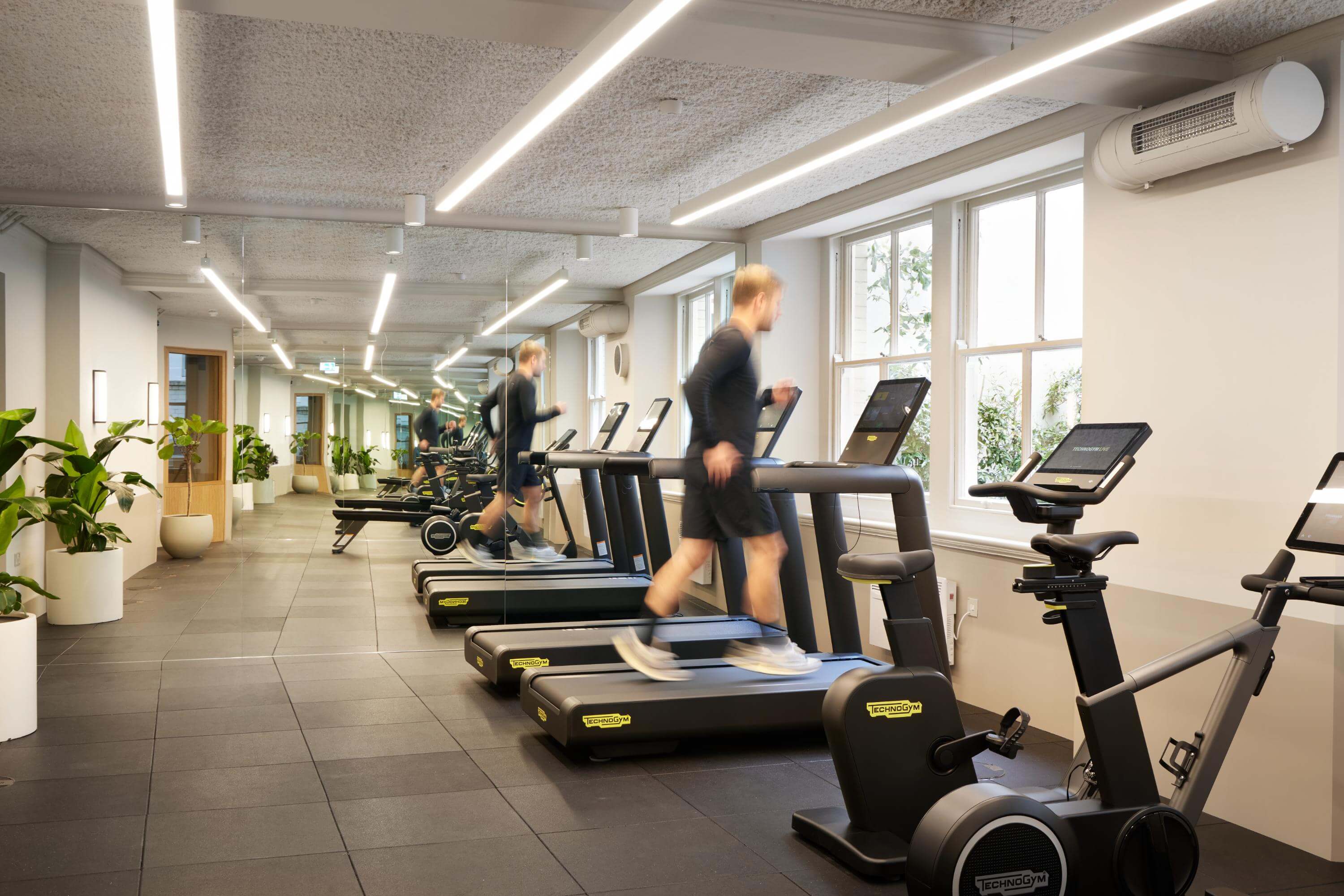
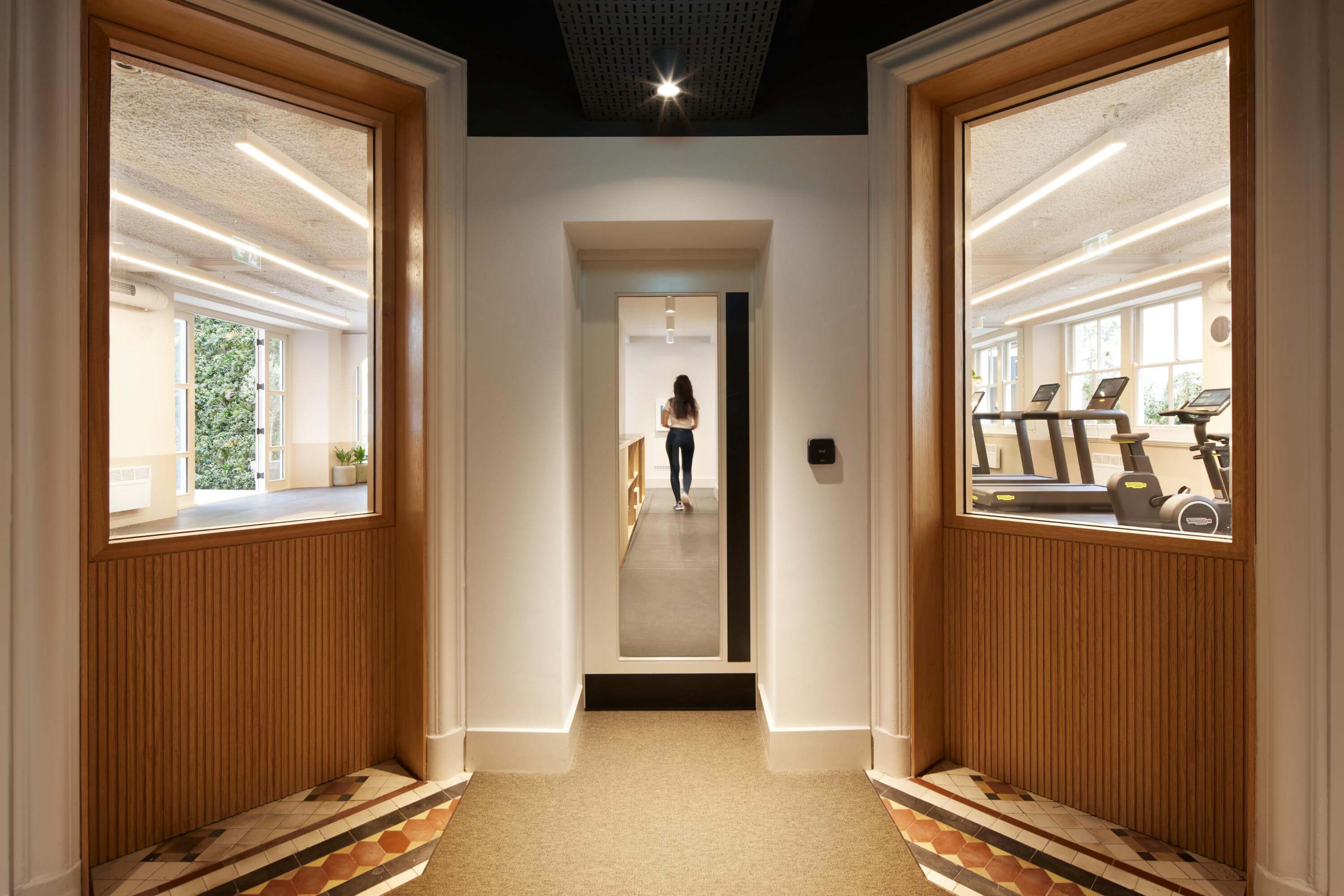
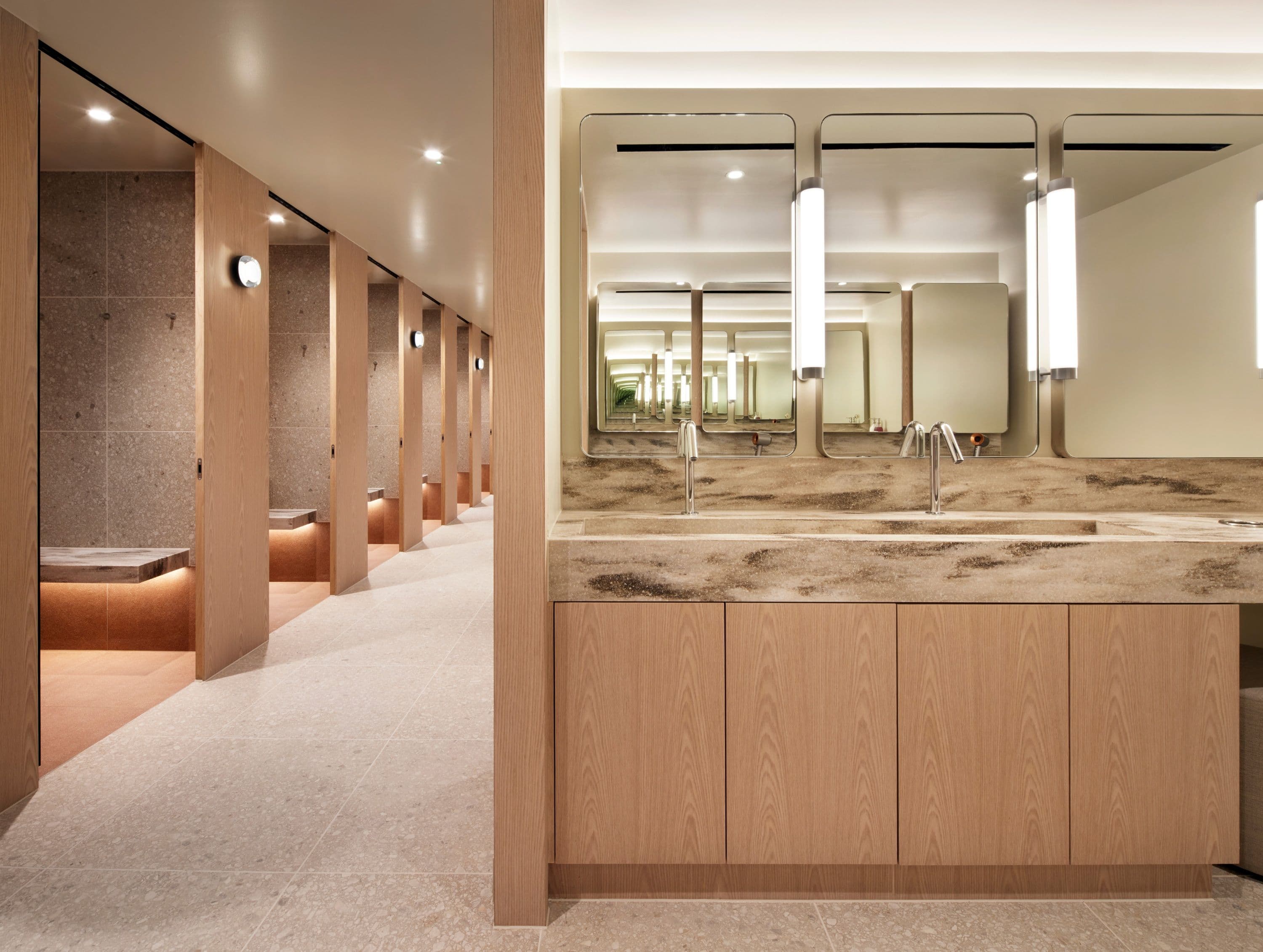
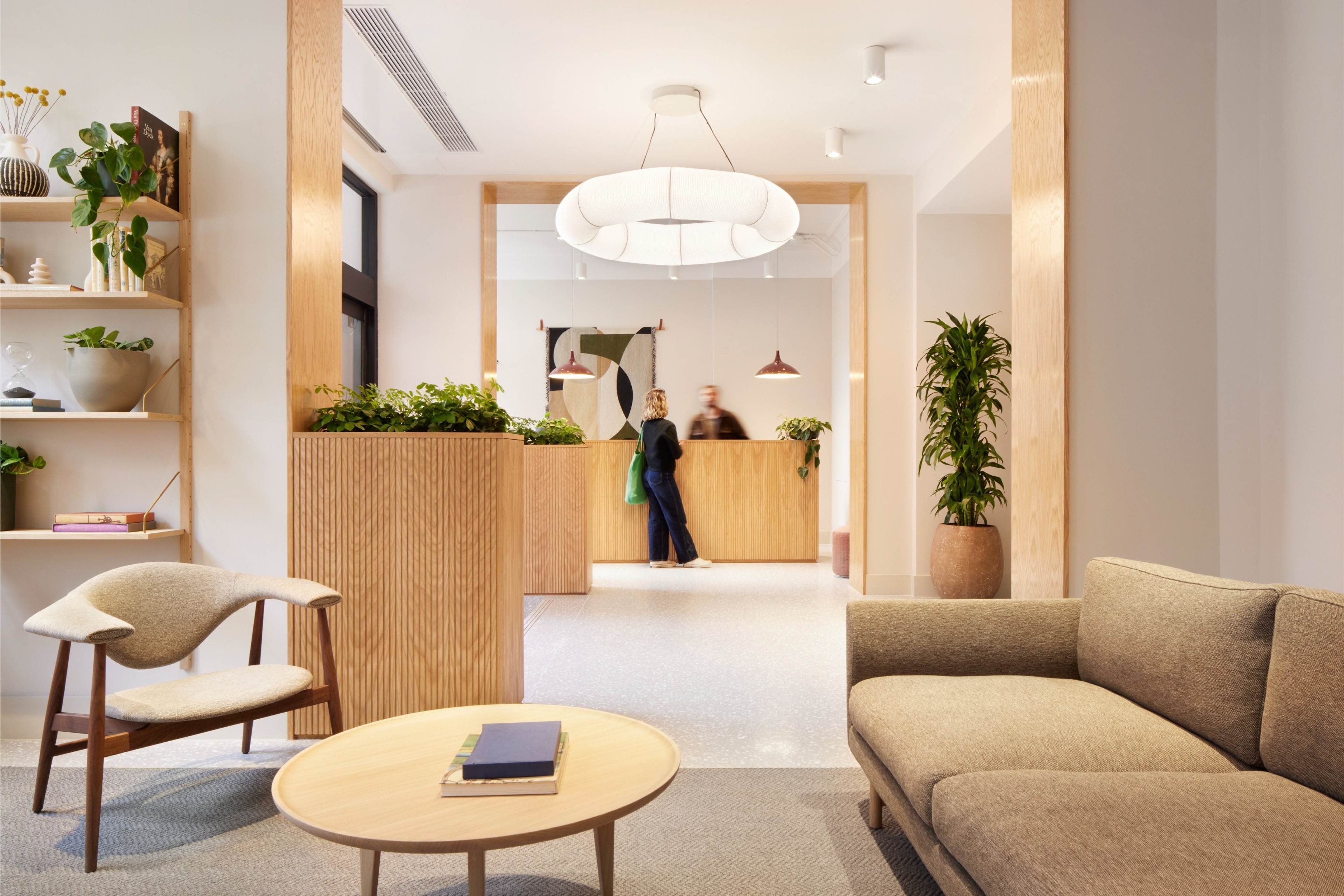
Temple Chambers today is a flexible, fully serviced business centre shaped by a phased programme of renewal with tenants in occupation. Its long, narrow plan has been carefully reworked to improve clarity, flow and connectivity, transforming formerly isolated suites into a coherent workplace. A welcoming reception anchors the seven-storey building, while new terraces, a gym, treatment rooms and cycle facilities support wellbeing and daily convenience. The result is an amenity-rich, future-ready environment that makes the most of its historic footprint and central location.
- Location
- Blackfriars, London
- Size
- 90,500 sqft
- Client
- Dorrington
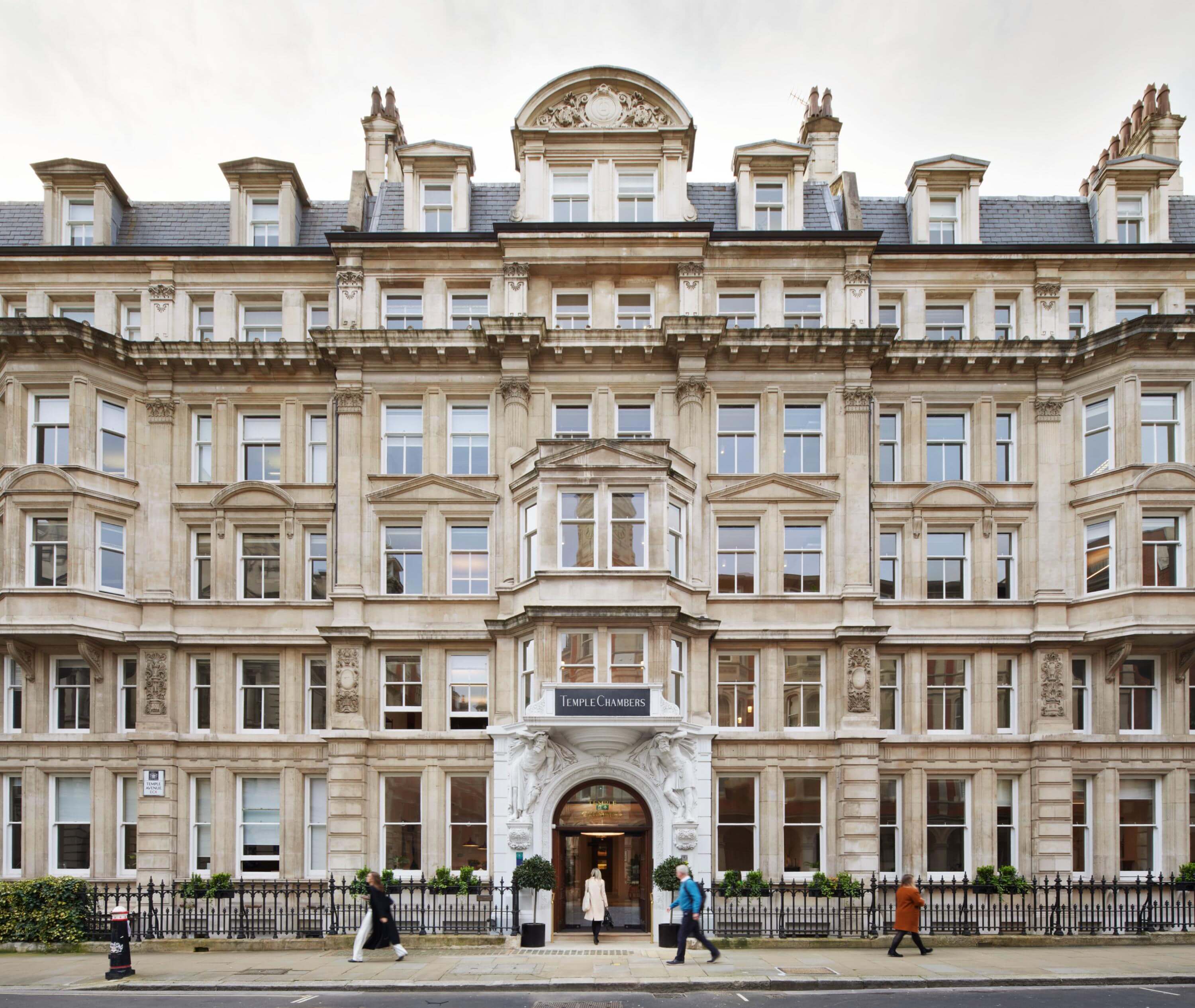
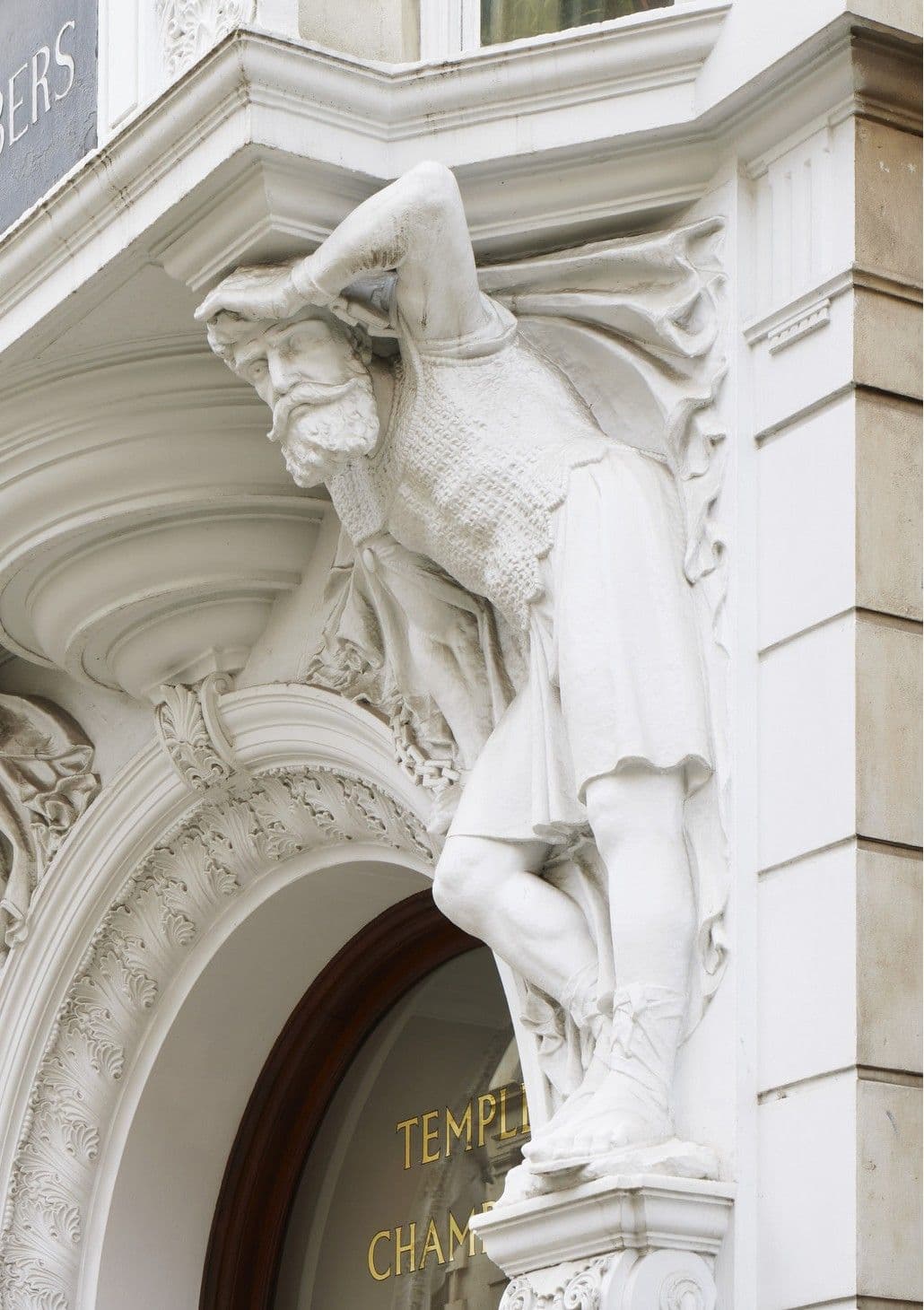
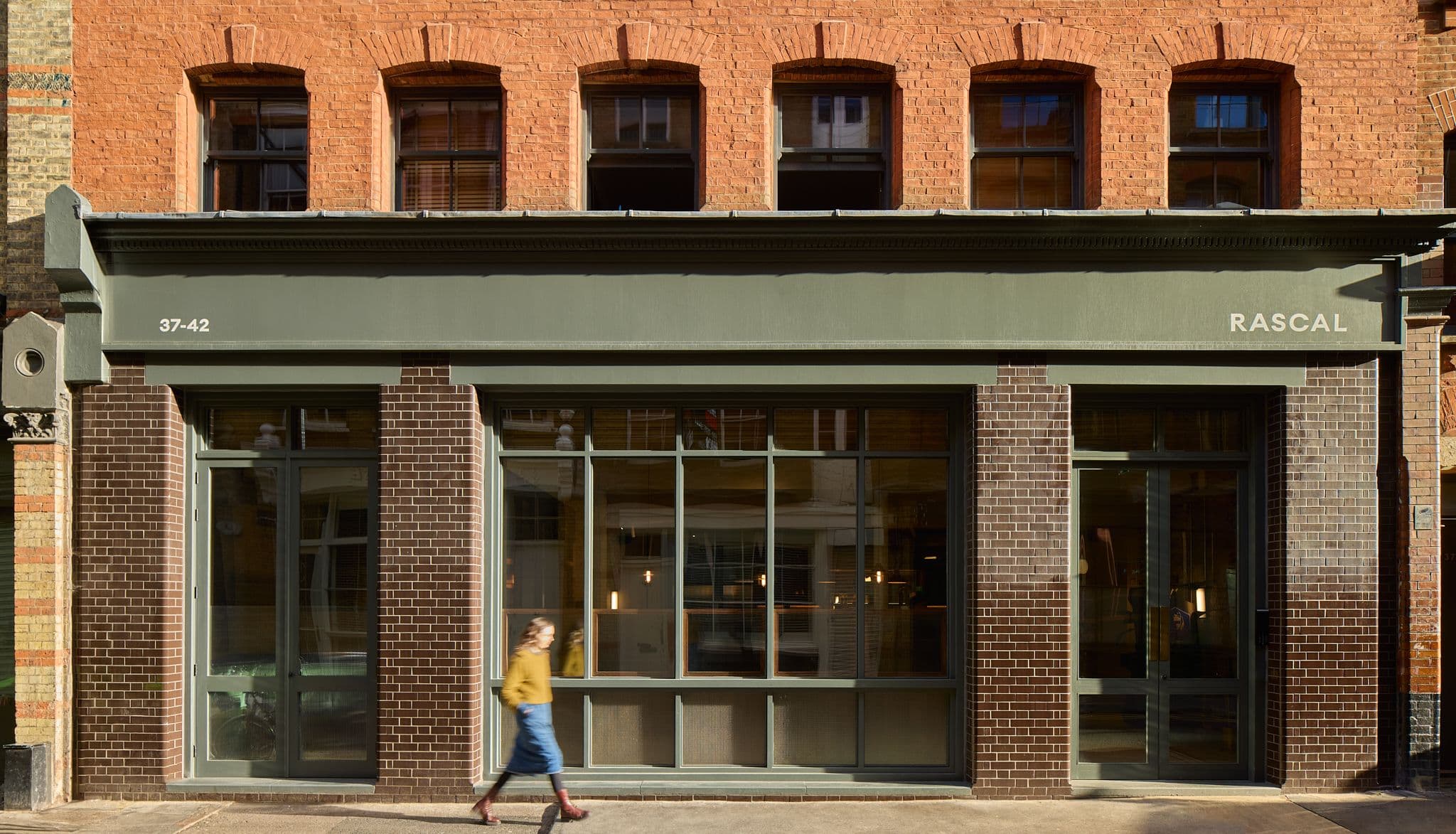
Originally built in the 1880s by John Whichcord Jr. for legal professionals, Temple Chambers occupies a prominent corner beside London’s legal district. Over time, layers of cellular fit outs, suspended ceilings and fragmented circulation had dulled its character and limited its potential. The ambition was to restore clarity, daylight and architectural presence while adapting the building for contemporary workspace expectations and strengthening its relationship with neighbouring Hamilton House.
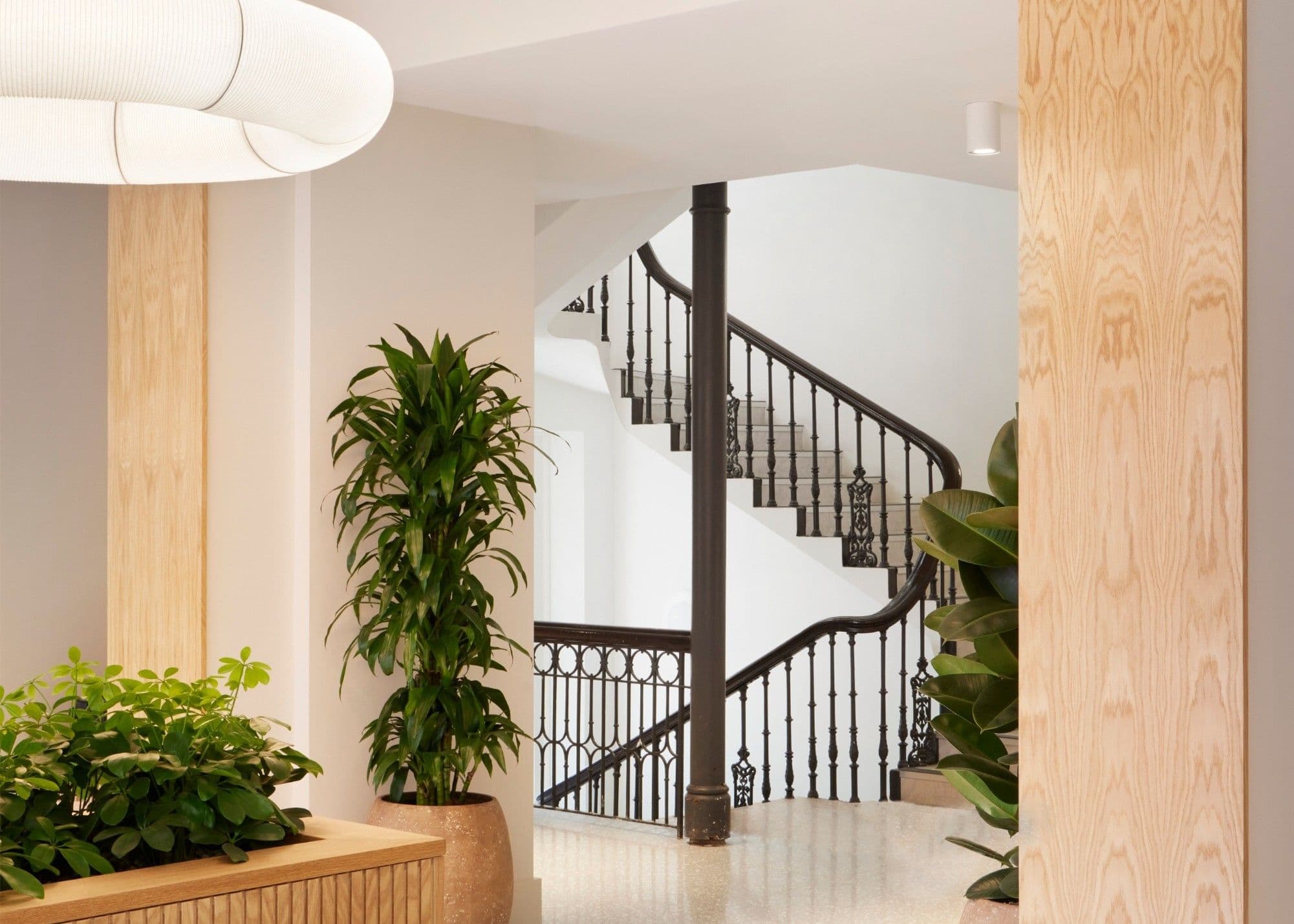
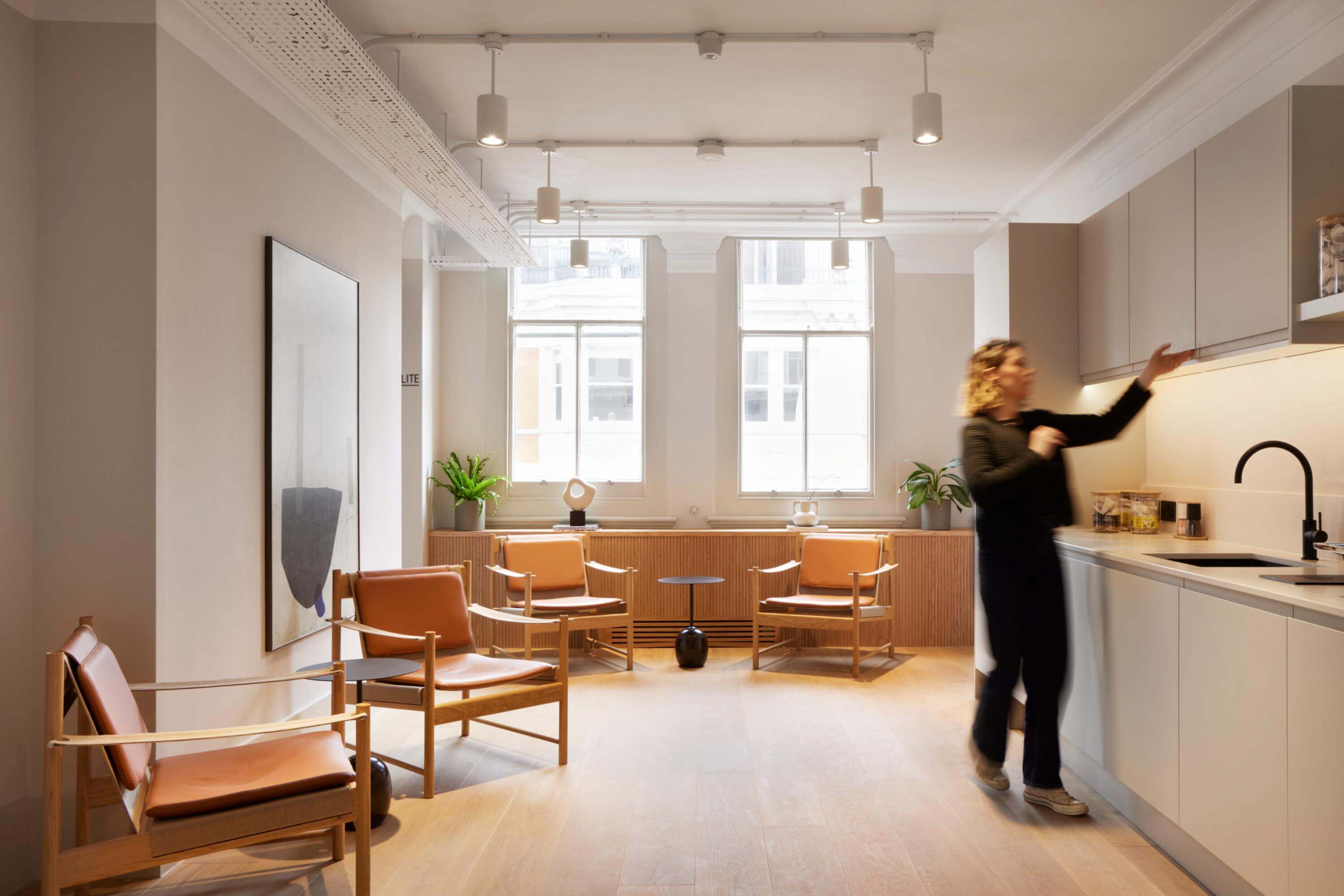
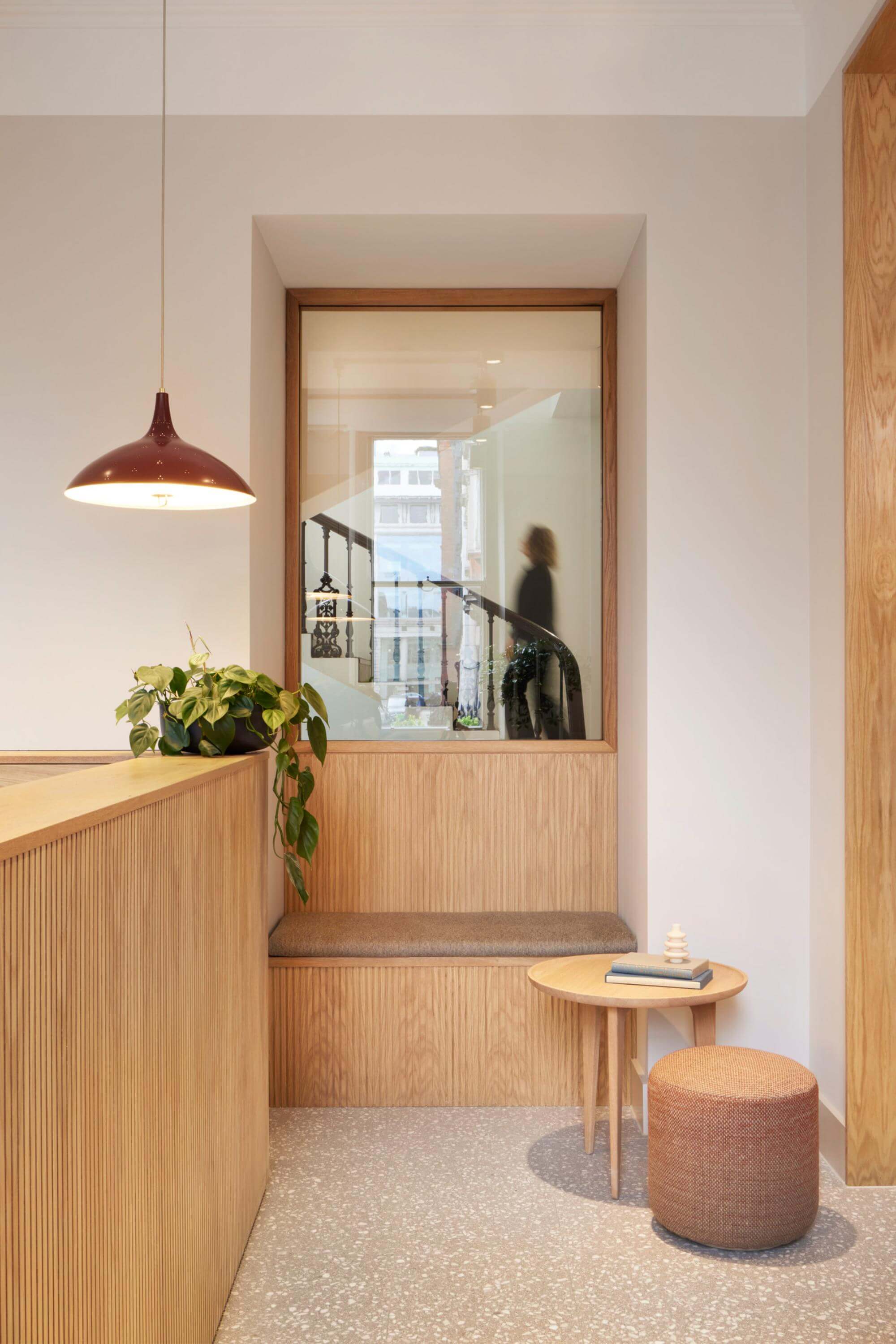
Dorrington’s brief centred on creating a flexible, fully serviced business centre with improved amenity, increased usable space and stronger connectivity across floors. Enhancing wellbeing through terraces, fitness facilities and better layouts was a priority, as was upgrading environmental performance within the constraints of an occupied heritage structure. Keeping the building operational throughout the phased works was essential, demanding careful sequencing and design strategies that allowed tenants to remain in place while the building was transformed.
Before and After
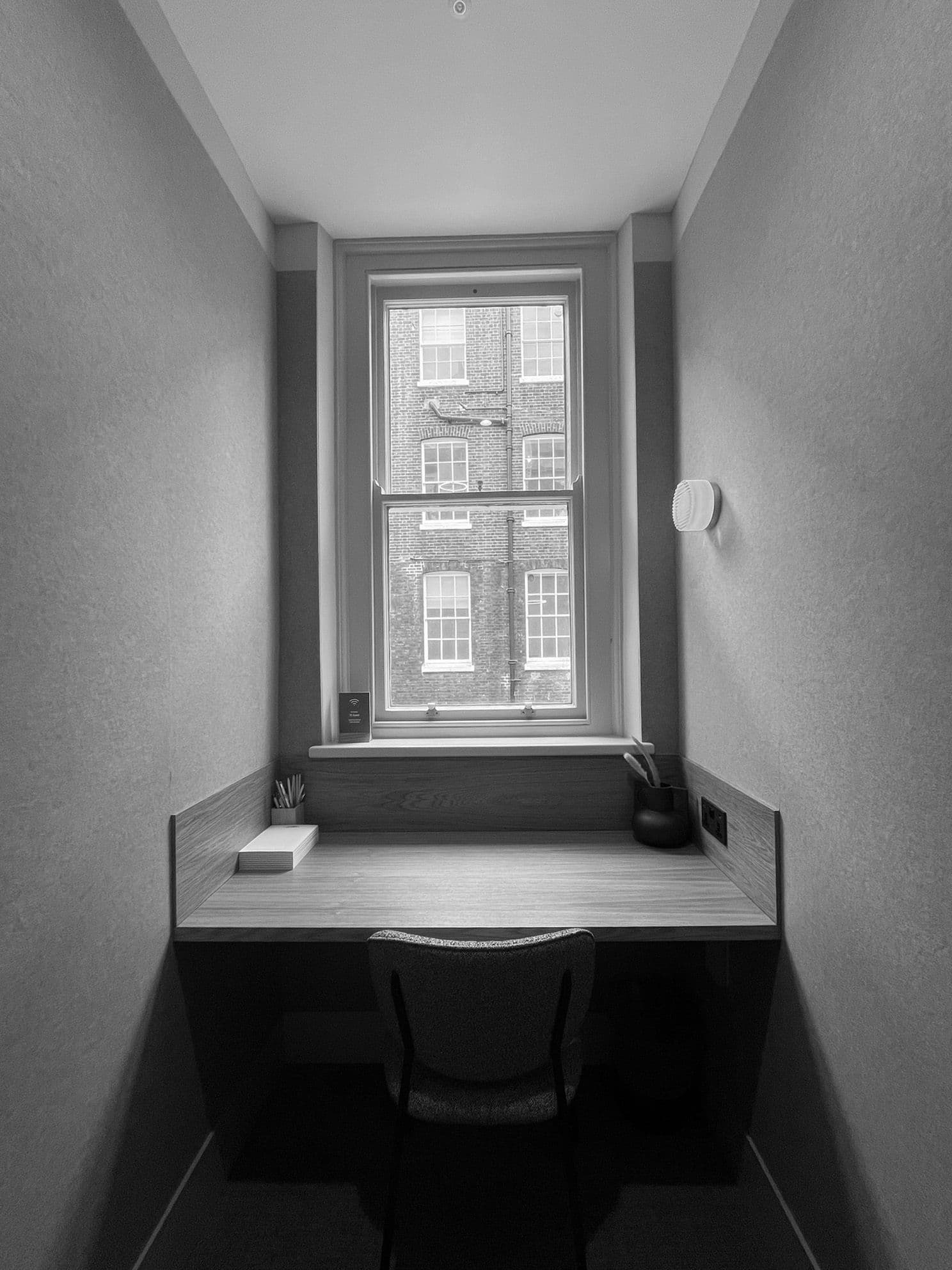
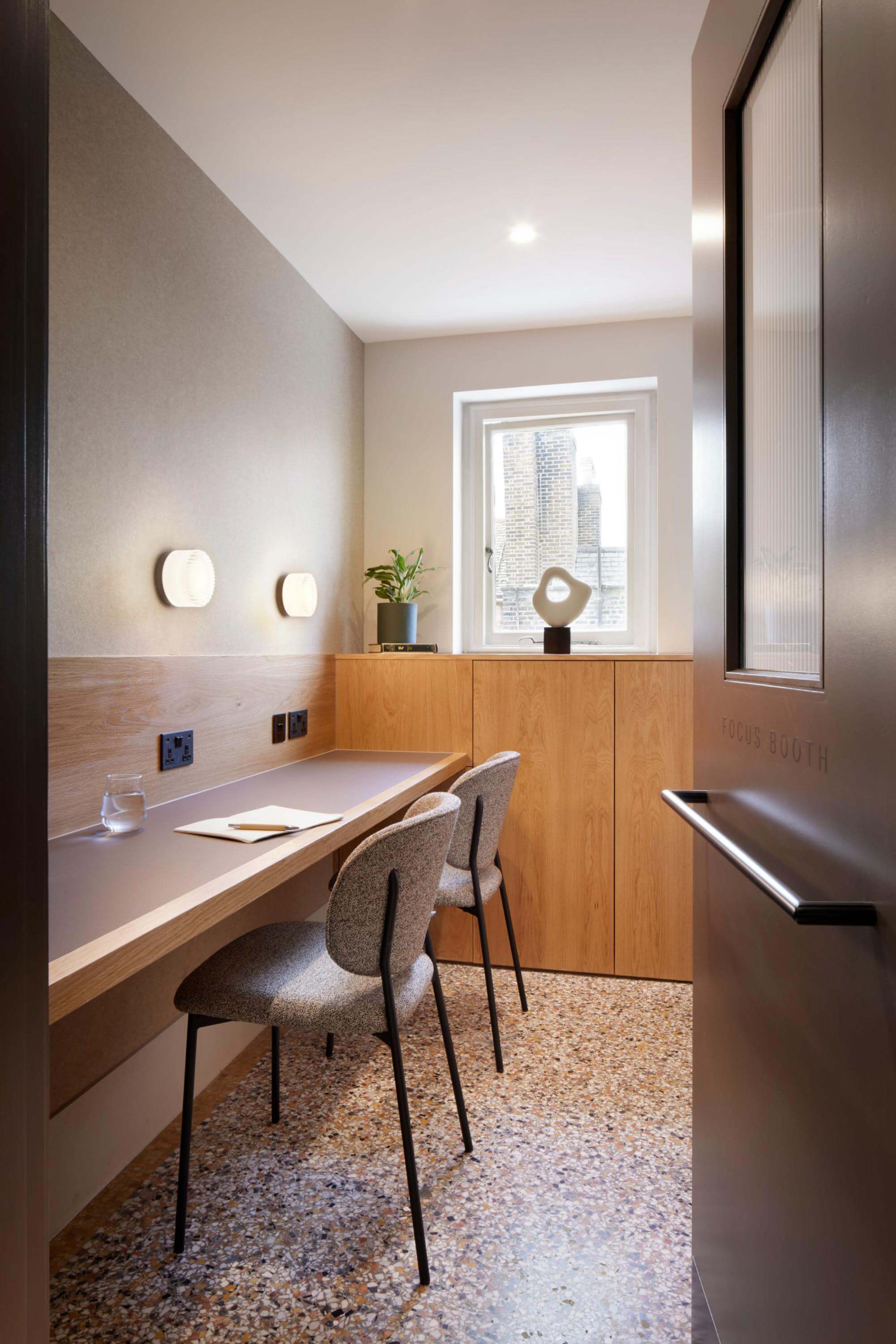
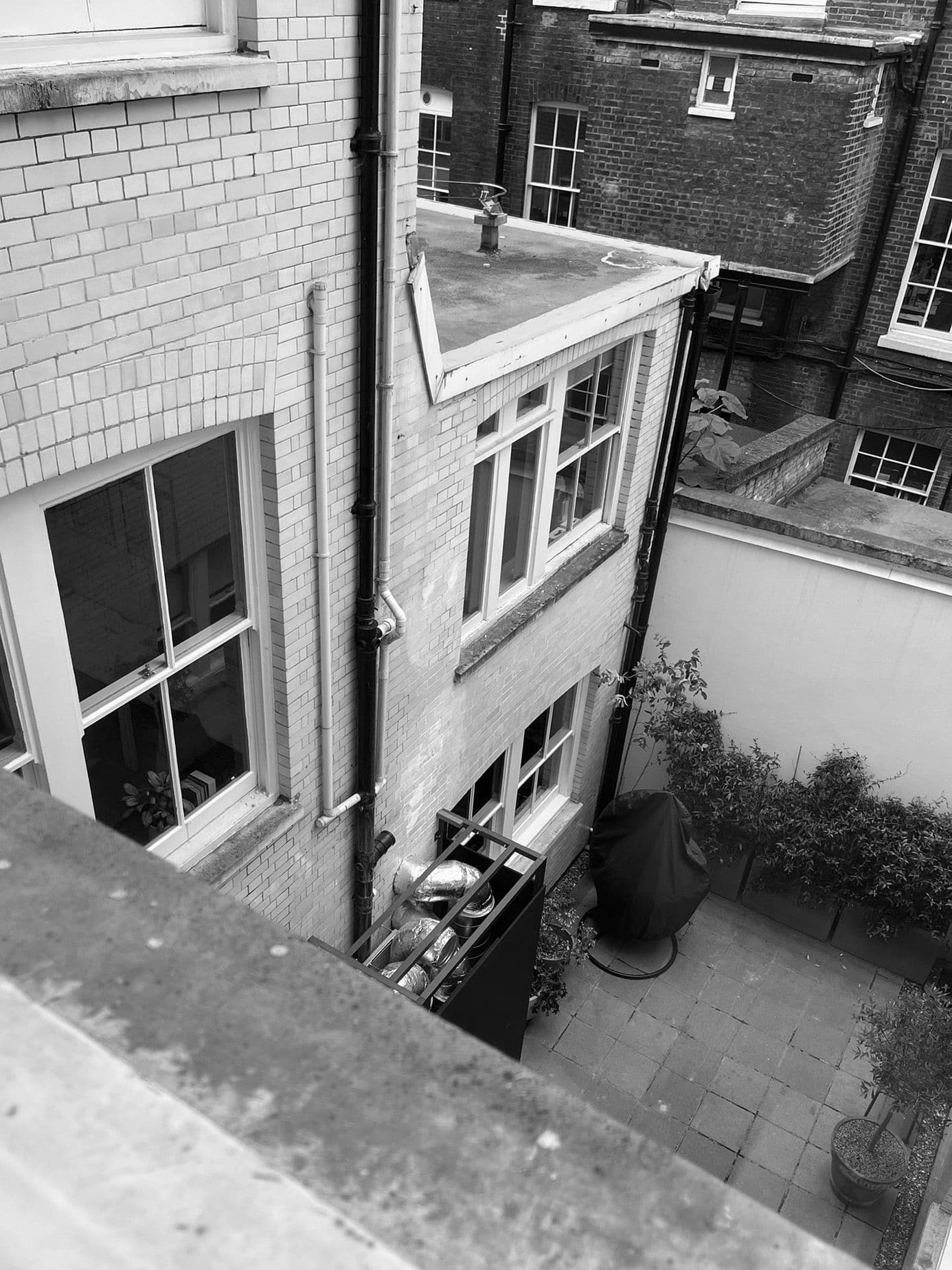
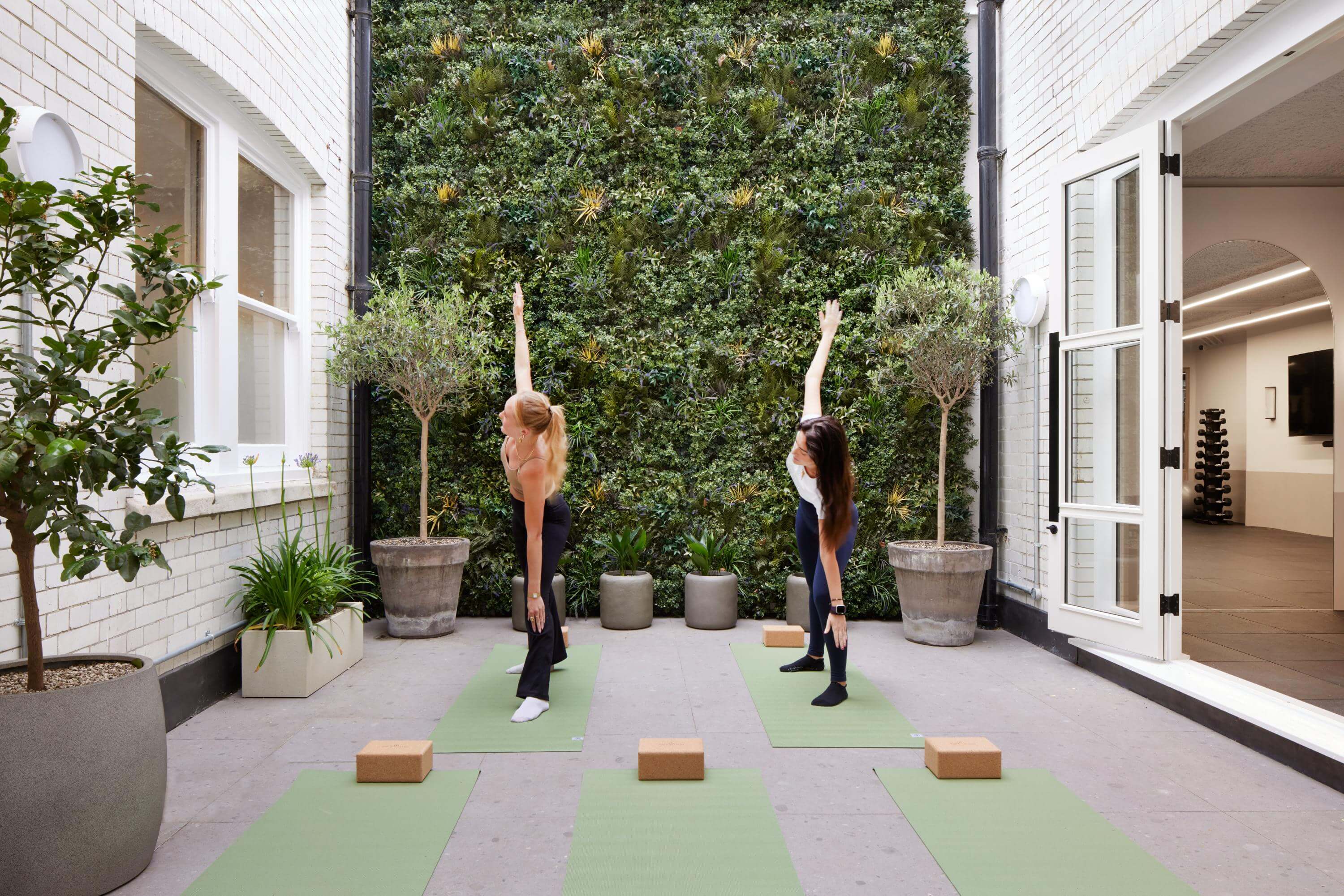
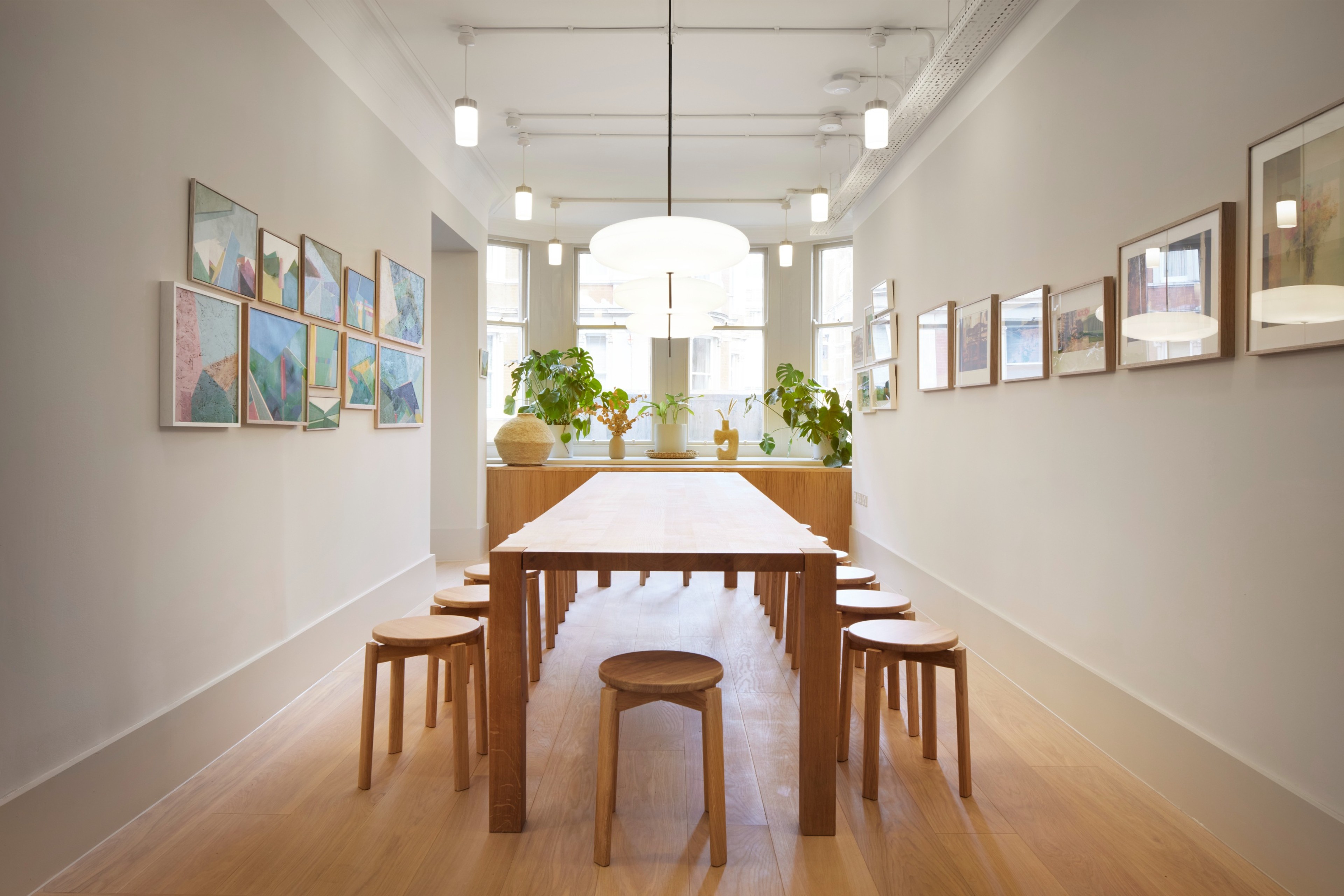
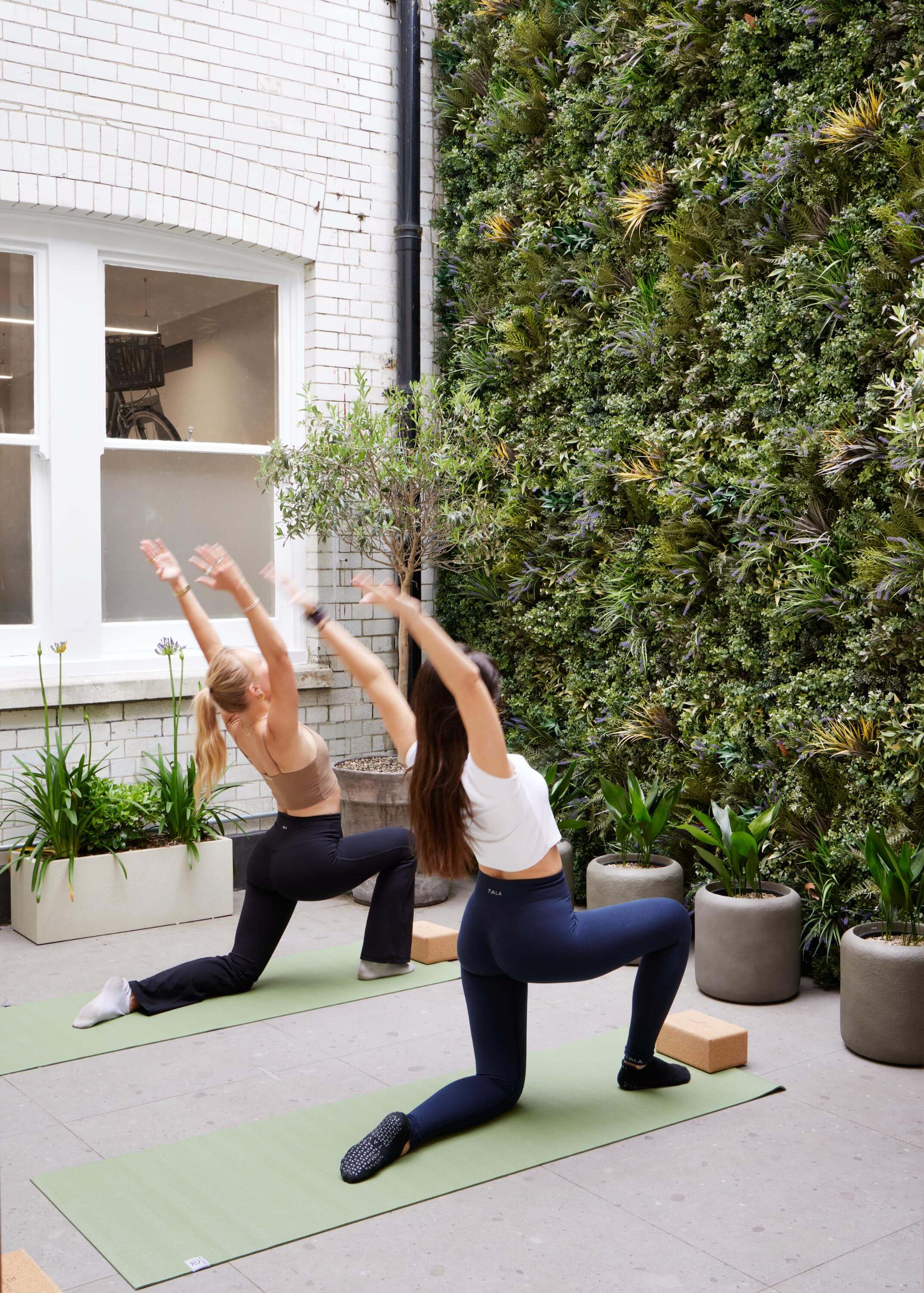
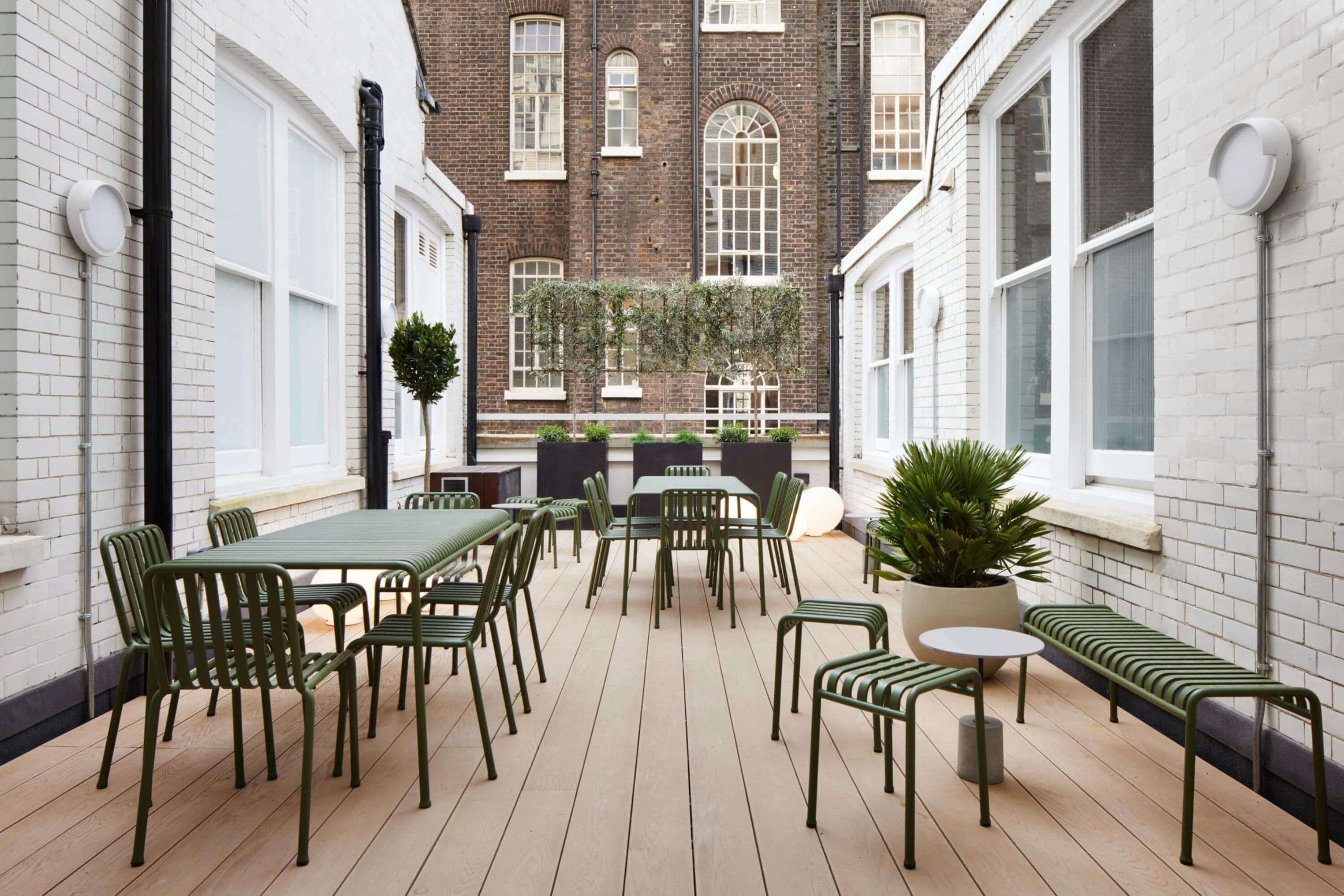
Our approach combined faithful restoration with precise, high-impact interventions. Layers of past fit-outs were peeled back to reveal original proportions, architectural detailing and long views through the plan. The narrow floorplates – where nearly a third of the building comprised corridor – were strategically replanned to improve usability and daylight, transforming isolated cellular rooms into coherent, adaptable workspace. A renewed reception brings clarity and welcome, setting a calm, contemporary tone for the floors above.
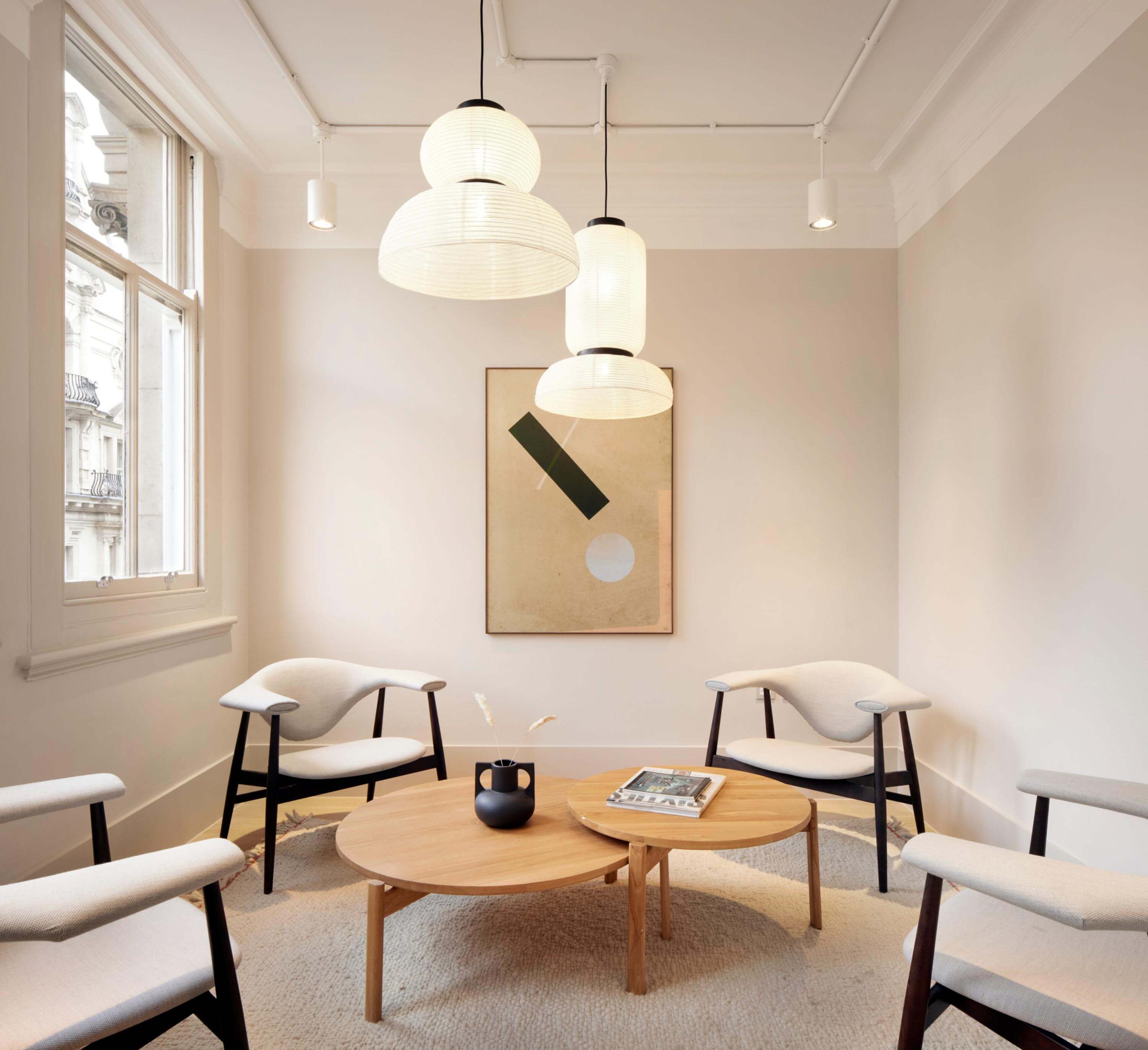
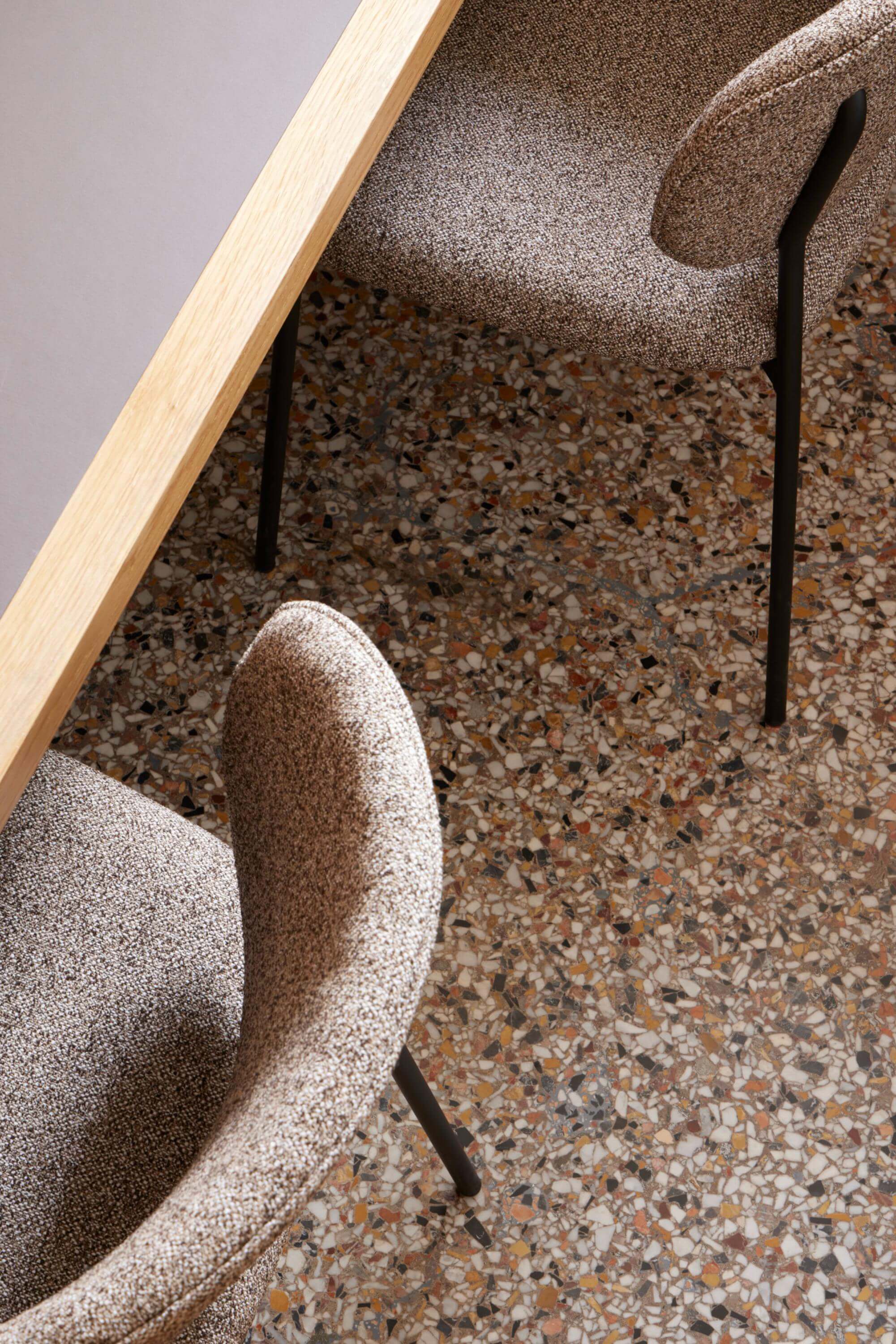
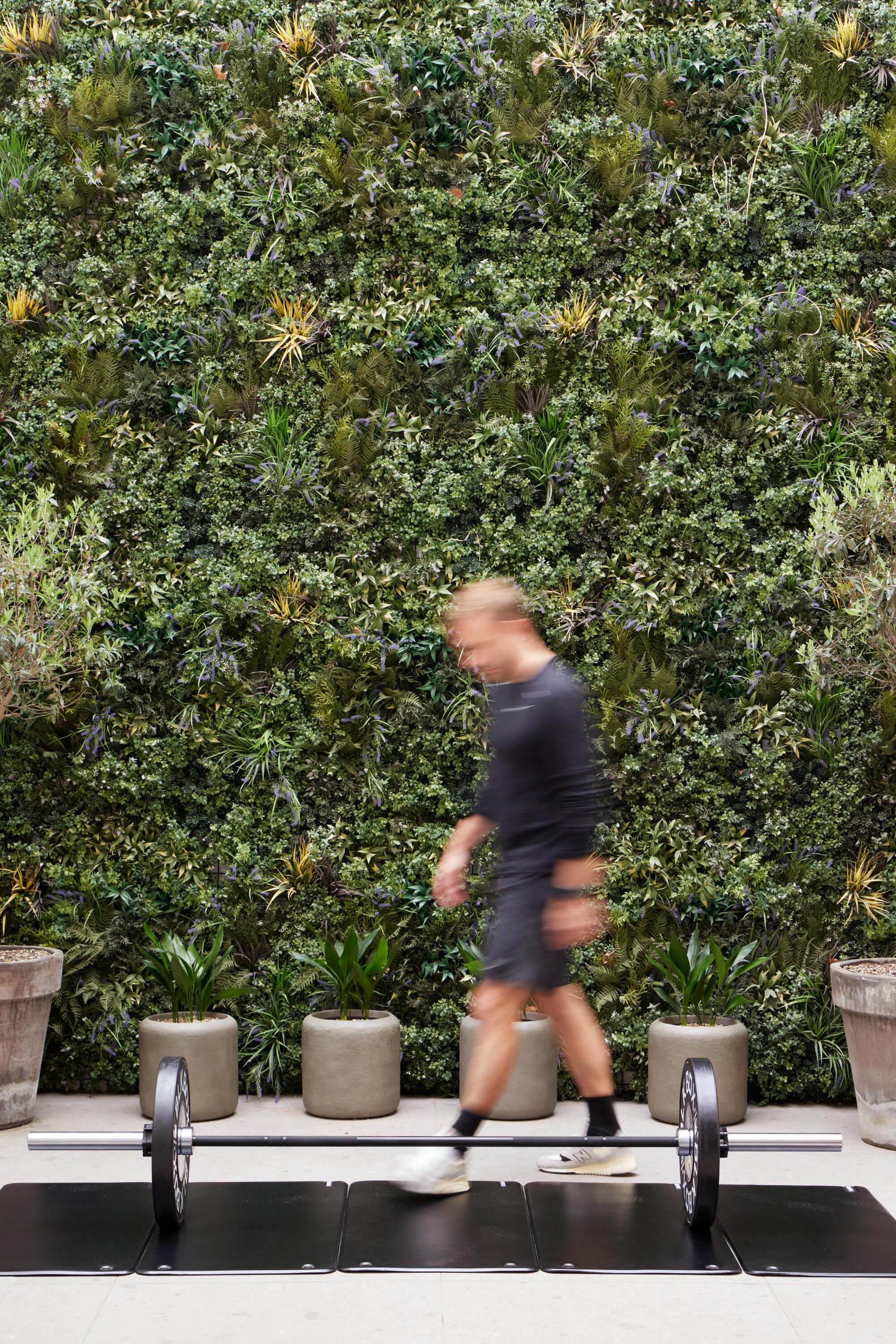
Amenity upgrades were woven into the existing fabric with care. New terraces introduce light, air and external space along the upper levels, while a gym, treatment rooms and cycle facilities support everyday wellbeing. Services were reconfigured discreetly to improve efficiency without compromising heritage features, and each phase was delivered while the building remained operational, requiring close coordination with tenants. The result is a more connected, flexible and future-ready workplace shaped around the realities of its historic footprint.